
Cabling and Management comprise the physical transmission pathways and organizational frameworks that distribute power and data across an enterprise network. This category includes high-speed copper networking lines, fiber-optic backbones, and specialized power conduits, alongside structural cable trays, racks, and patch panels designed to optimize airflow, reduce signal interference, and simplify ongoing infrastructure maintenance.
1. Data Transmission Media: Copper vs. Fiber Optic
The physical media chosen determines the maximum data throughput, maximum transmission distance, and susceptibility to environmental electrical noise.
Twisted-Pair Copper (Ethernet): Categorized by performance tiers (e.g., Cat6 handles up to $1\text{ Gbps}$ at $100\text{ meters}$, while Cat6A supports up to $10\text{ Gbps}$ networks and mitigates crosstalk through tighter internal copper twisting and shielding). Copper relies on standard RJ45 connectors and is universally used for the access layer.
Fiber Optic Cabling: Uses light pulses instead of electrical signals, making it completely immune to Electromagnetic Interference (EMI) caused by nearby high-voltage power lines or heavy machinery.
Single-mode Fiber (SMF): Uses a tiny core ($\sim 9\,\mu\text{m}$) to transmit a single ray of laser light over long distances (kilometers), commonly serving as campus or city-wide backbones.
Multi-mode Fiber (MMF): Uses a wider core ($\sim 50\,\mu\text{m}$ or $62.5\,\mu\text{m}$) allowing multiple wavelengths of light to bounce along the core, optimized for high-bandwidth data transfers over shorter distances inside a single server room (up to a few hundred meters).
2. Power Over Ethernet (PoE) Infrastructure
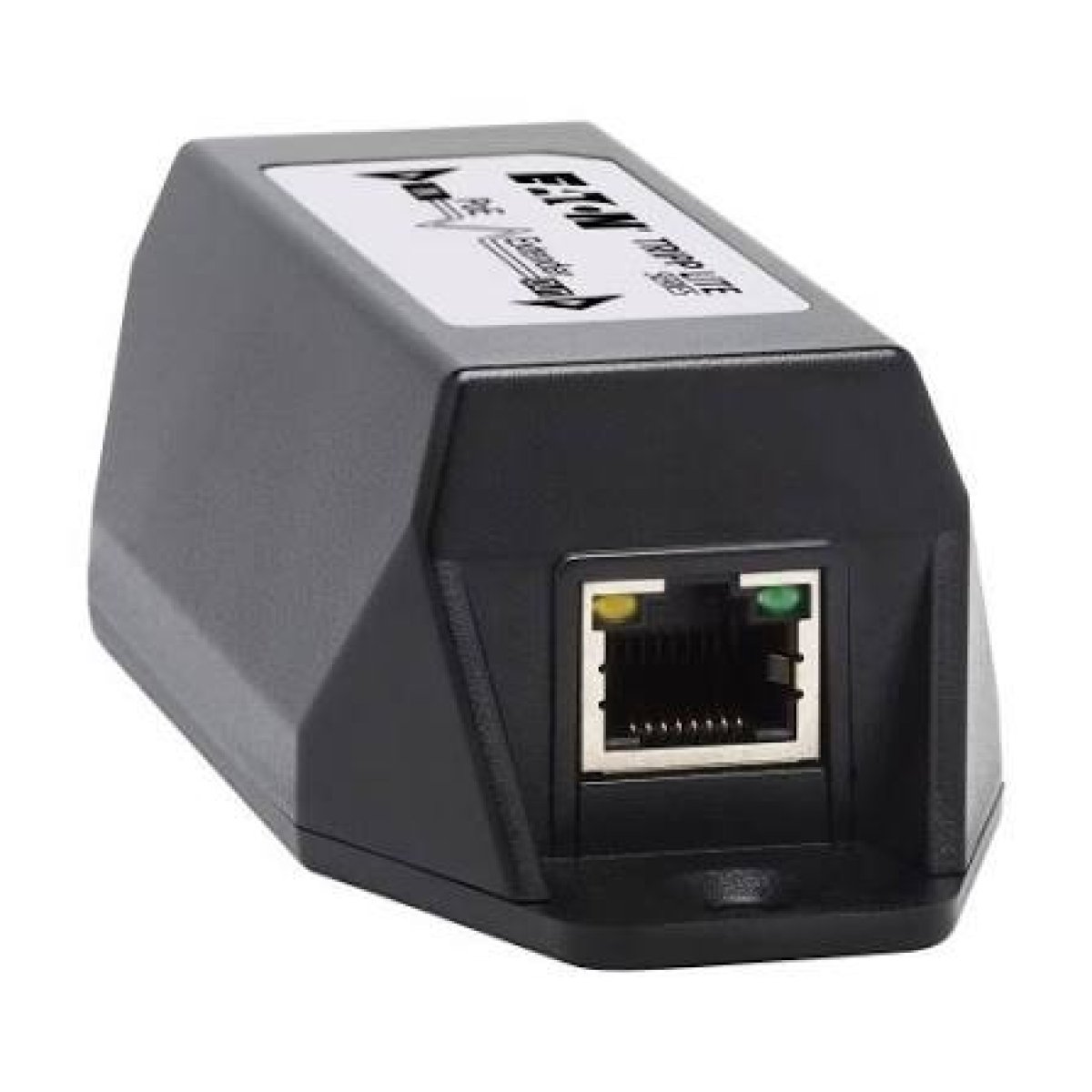
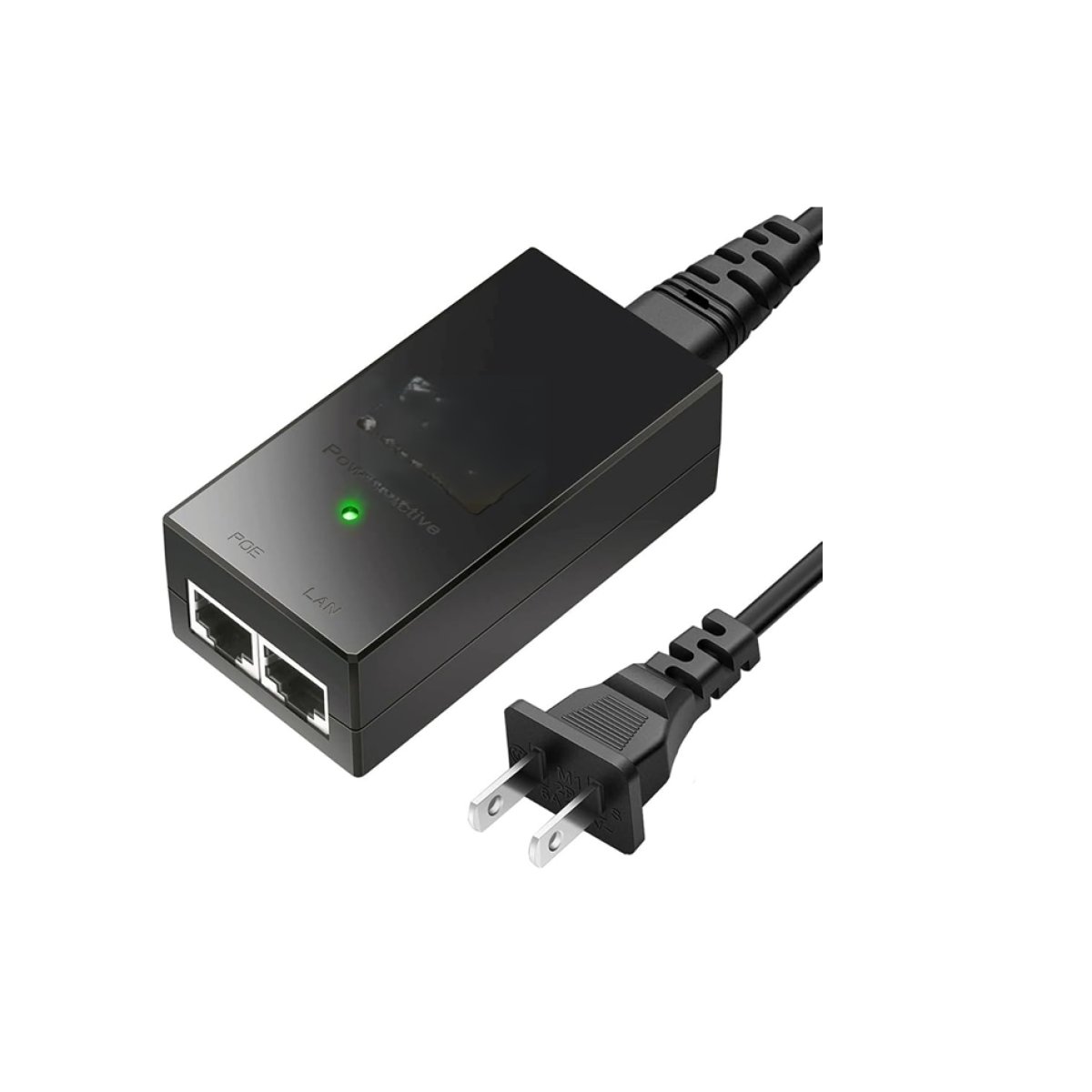
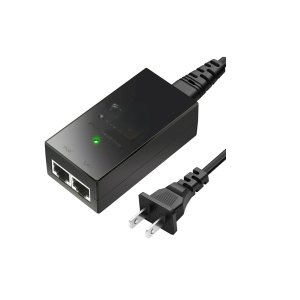
To eliminate the expensive labor of running separate electrical conduits alongside low-voltage data cables to every edge device, modern network infrastructure relies heavily on Power over Ethernet (PoE).
Governed by IEEE standards, PoE safely injects direct current ($DC$) electrical power right over the spare copper pairs inside standard Category network cables:
PoE (IEEE 802.3af): Delivers up to $15.4\text{W}$ at the switch port, suitable for basic static IP cameras and VoIP desk phones.
PoE+ (IEEE 802.3at): Delivers up to $30\text{W}$, powering motorized Pan-Tilt-Zoom (PTZ) security cameras and early Wi-Fi access points.
PoE++ / High-Power PoE (IEEE 802.3bt): Delivers up to $60\text{W}$ or $90\text{W}$ of power over all four twisted pairs inside the cable. This high-wattage capacity allows standard network lines to run power directly to smart LED light fixtures, advanced biometric entry kiosks, and heavy dynamic outdoor pan-tilt cameras without requiring a traditional nearby $120\text{V}/240\text{V}$ AC outlet.
3. Structural Cable Management & Organization
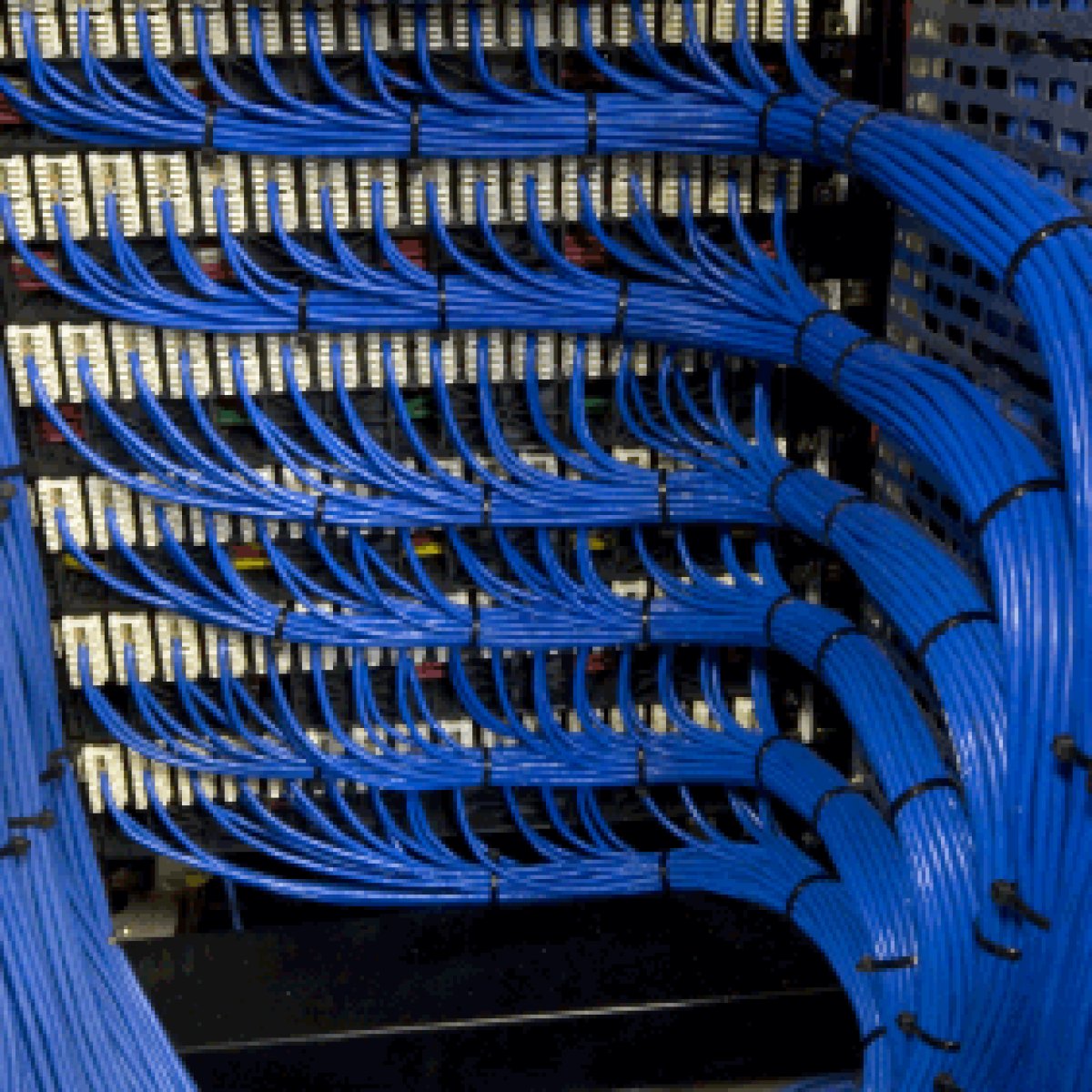
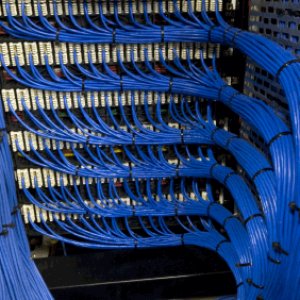
Poorly organized cabling creates physical hazards, blocks vital equipment airflow, and dramatically increases troubleshooting timelines during a network outage. Professional infrastructure deployments leverage rigid structural management systems:
Patch Panels & Horizontal Managers: Instead of plugging structural field cables straight into an active network switch, field wires terminate permanently at the back of a rack-mounted Patch Panel. Short, flexible patch cords are then neatly routed through horizontal or vertical cable managers to bridge connections to the switch ports. This protects the permanent structural lines from physical wear and tear.
Cable Pathway Infrastructure: Overhead ladder racks, wire mesh basket trays, and enclosed floor raceways physically support massive bundles of cables as they run through building plenums and ceilings. Keeping high-bandwidth data pathways physically segregated from high-voltage AC electrical lines prevents electrical noise induction and ensures crisp, error-free packet transmission across the entire enterprise facility.