
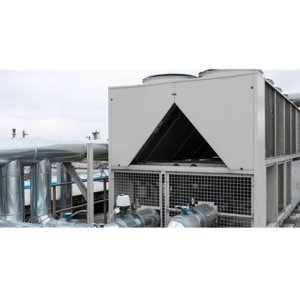
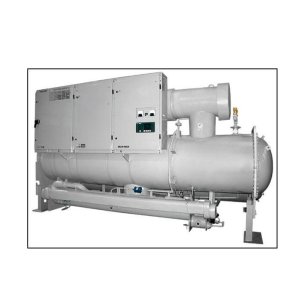
A Chiller-Based System is a heavy-duty, centralized hydronic cooling framework universally utilized in large-scale commercial, industrial, and institutional facilities. Instead of blowing air directly over refrigerant lines, a centralized chiller uses a standard refrigeration cycle to cool a secondary fluid—typically water or a water-glycol mixture—which is then pumped throughout the building to individual air handling units (AHUs) and fan coils to provide high-capacity, exceptionally stable climate control.
1. Core Architecture & Hydronic Loops
Chiller-based systems are classified as hydronic cooling networks because they separate the primary chemical refrigeration cycle from the building's internal air distribution using water loops.
The system operates via two primary fluid circuits working in tandem:
The Chilled Water Loop (Evaporator Side): The chiller’s evaporator absorbs heat from a closed loop of indoor building water, cooling it down to a standard operating temperature of roughly 7°C (45°F). Heavy-duty circulation pumps then push this chilled water through insulated steel or copper piping to Air Handling Units (AHUs) and Fan Coil Units (FCUs) positioned across the facility's floors. Internal fans blow warm indoor air across these cold water coils to air-condition the space, warming the water back up to about 12°C (54°F) before it returns to the chiller to repeat the cycle.
The Condenser Loop (Heat Rejection Side): The heat that was absorbed by the refrigerant from the chilled water loop must be rejected from the building. How the system handles this heat rejection dictates the two primary categories of chillers: Air-Cooled and Water-Cooled.
2. System Configurations: Air-Cooled vs. Water-Cooled
Mechanical engineers select a chiller configuration based on a facility's physical space, local water access, and overall cooling tonnage requirements.Air-Cooled Chillers
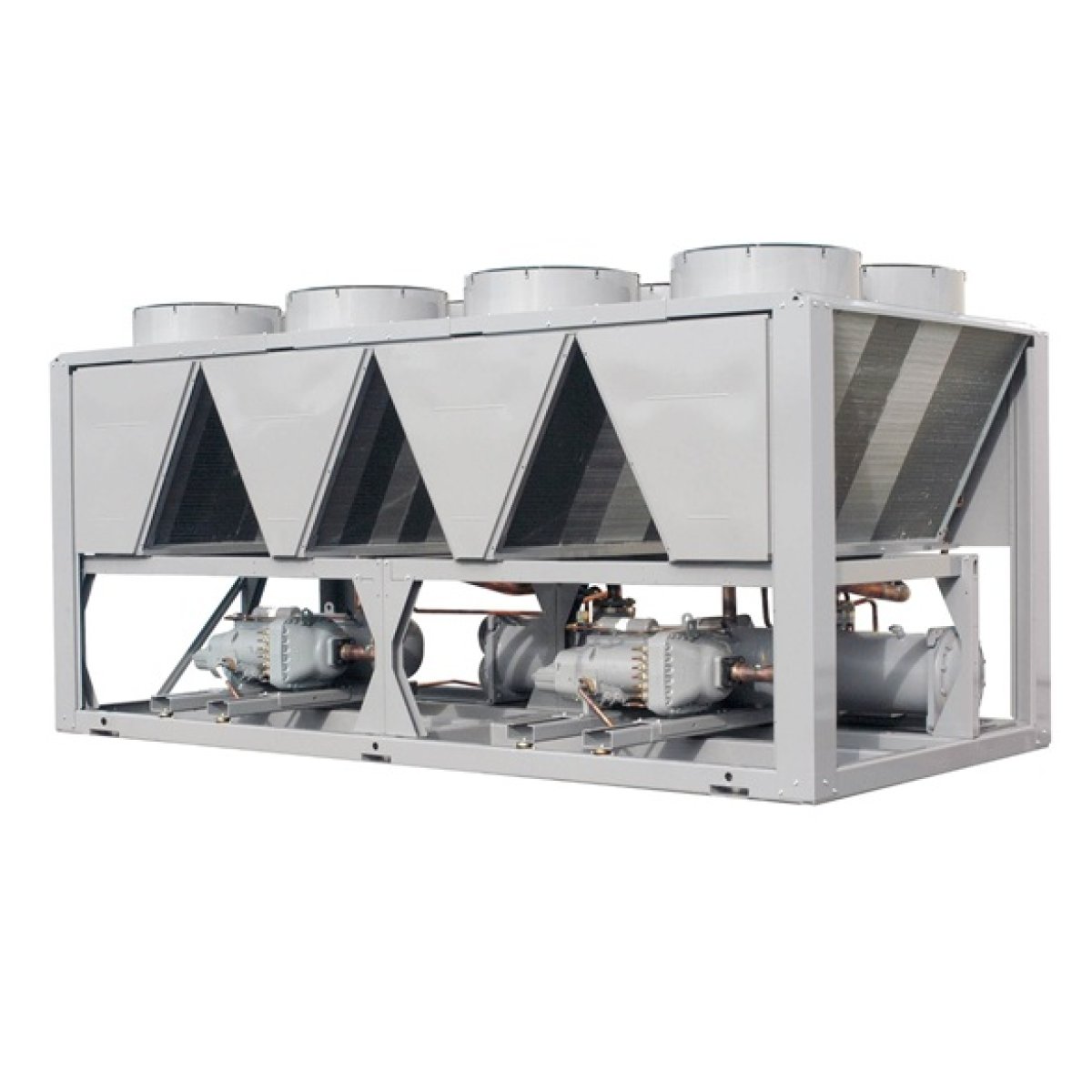
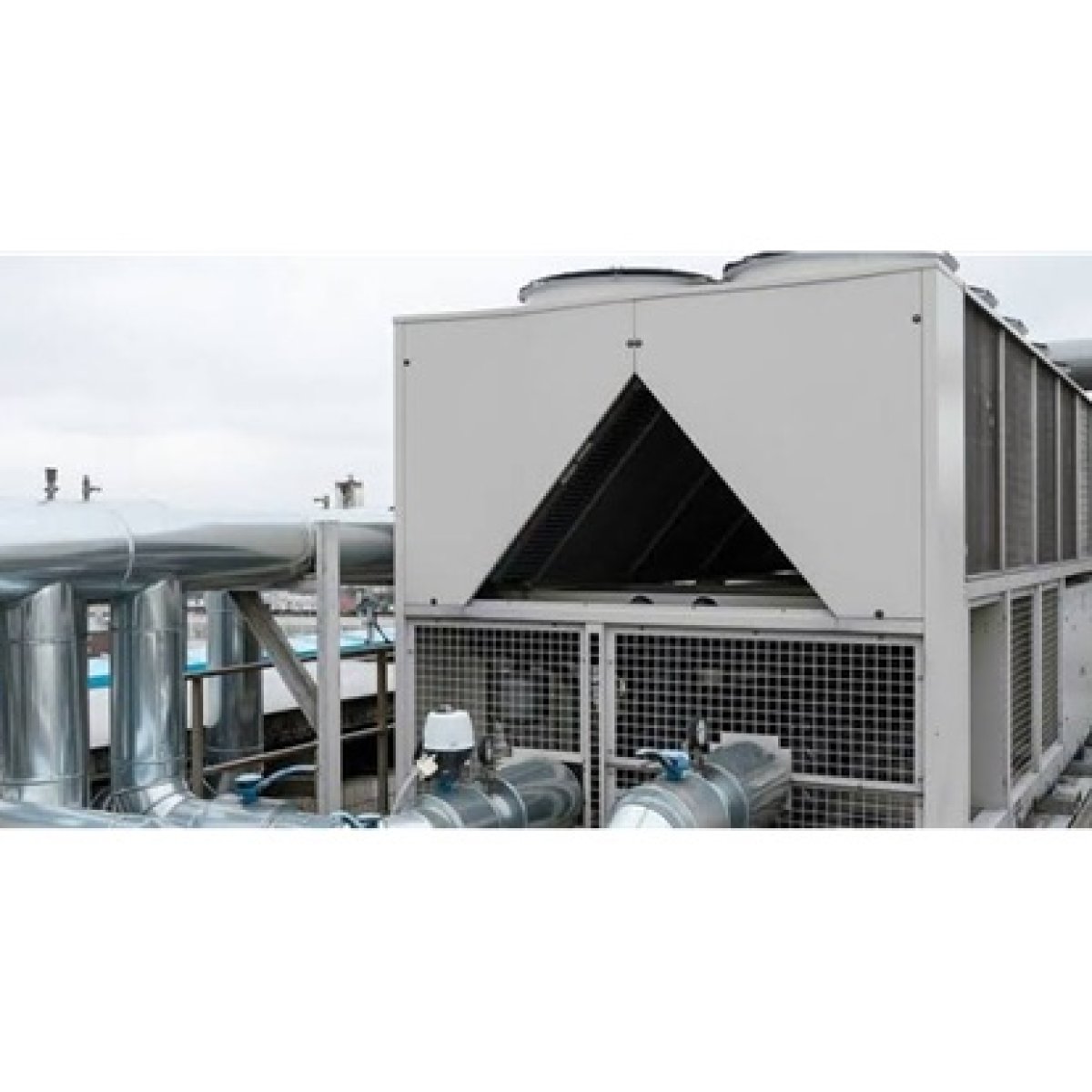
Air-cooled units utilize ambient air to condense the refrigerant. They feature heavy-duty propeller fans that draw outdoor air directly across finned condenser coils.
Layout: Typically installed outdoors on rooftop structural pads or ground-level mechanical yards.
Pros & Cons: They have a simpler design, require fewer mechanical components, and eliminate the need for an continuous water supply. However, because they rely on the outdoor dry-bulb temperature to reject heat, they are less thermodynamically efficient than water-cooled alternatives, especially during hot summer peaks.
Water-Cooled Chillers
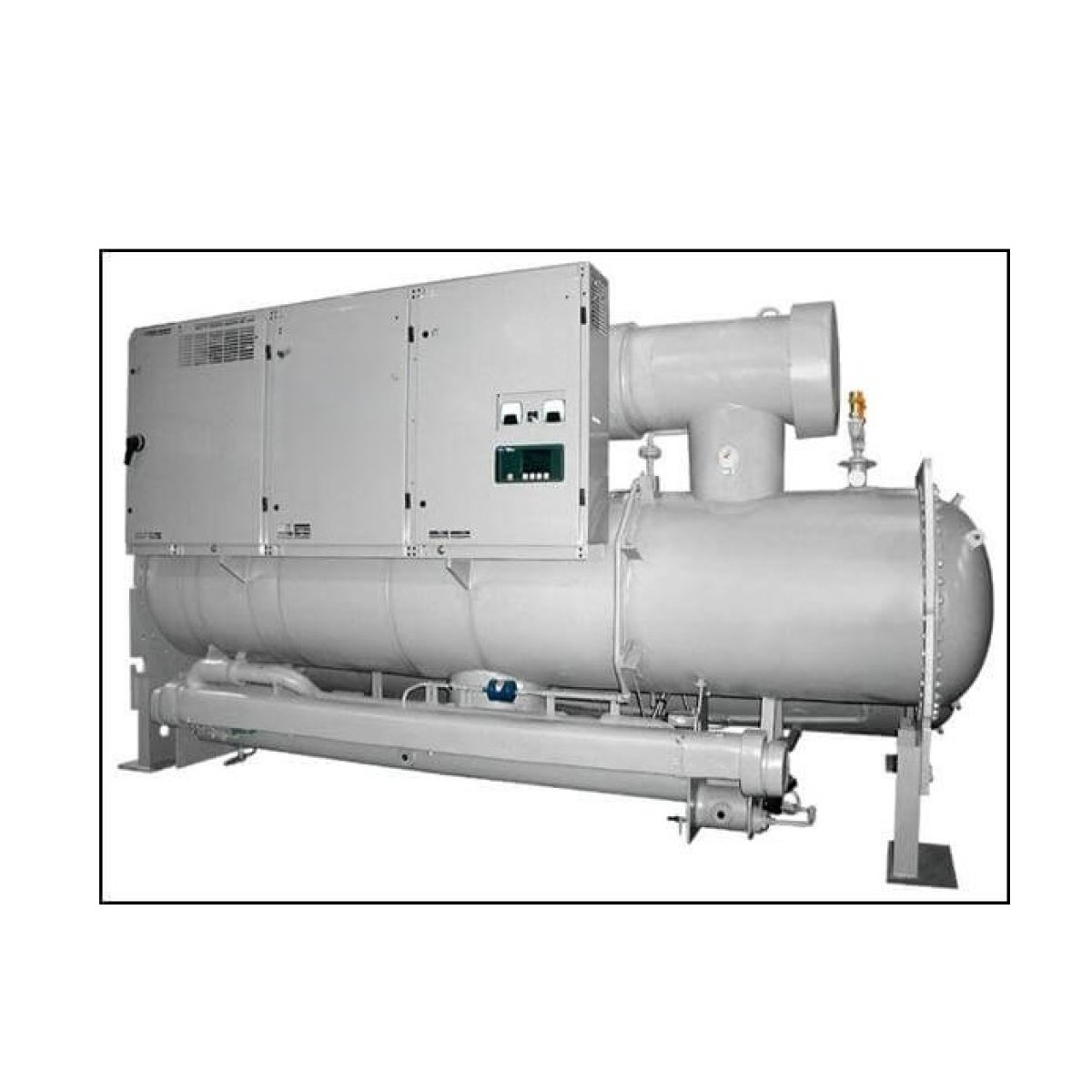
Water-cooled units utilize a secondary water loop paired with an outdoor Cooling Tower to reject heat. The warm refrigerant passes through a shell-and-tube condenser where heat is transferred to a condenser water loop. This water is then pumped to the cooling tower, where a portion of it evaporates into the atmosphere, cooling the remaining liquid.
Layout: The chiller itself is safely housed indoors within a dedicated mechanical room, while only the cooling tower sits outdoors.
Pros & Cons: Because they leverage the outdoor wet-bulb temperature (evaporative cooling), water-cooled chillers are significantly more energy-efficient and boast longer lifespans. The drawback is increased complexity, higher upfront capital expense, and continuous water consumption requiring rigorous chemical water treatment to prevent scale and biological growth (like Legionella).
3. Compressor ClassificationsThe thermodynamic efficiency and cooling capacity of a chiller are largely determined by its compressor type:
Scroll Chillers ($10 \text{ to } 150 \text{ Tons}$): Utilize nested, spiral scroll plates to compress refrigerant. They are quiet, highly reliable, and commonly arranged in modular banks for light commercial or small medical office buildings.
Screw Chillers ($50 \text{ to } 500 \text{ Tons}$): Utilize matching helical twin rotors to continuously squeeze refrigerant. They excel at handling mid-to-large variable loads and are frequently used in large schools, manufacturing centers, and high-rise structures.
Centrifugal Chillers ($200 \text{ to } 3,000+\text{ Tons}$): Utilize high-speed kinetic impellers to force gas compression. They are the undisputed champions of raw cooling capacity, offering unmatched peak-load energy efficiency for massive infrastructure projects like international airports, university campuses, and district cooling grids.