
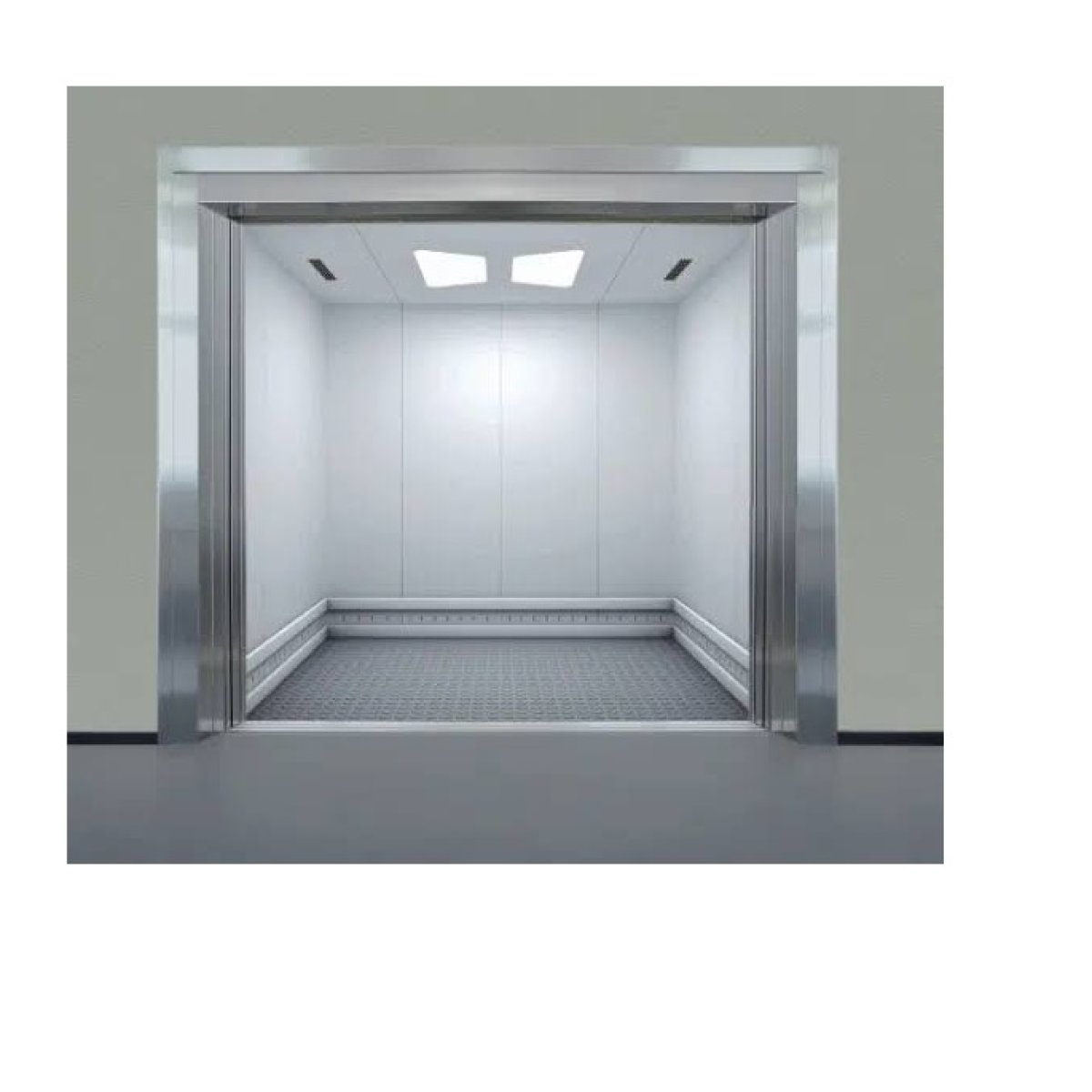
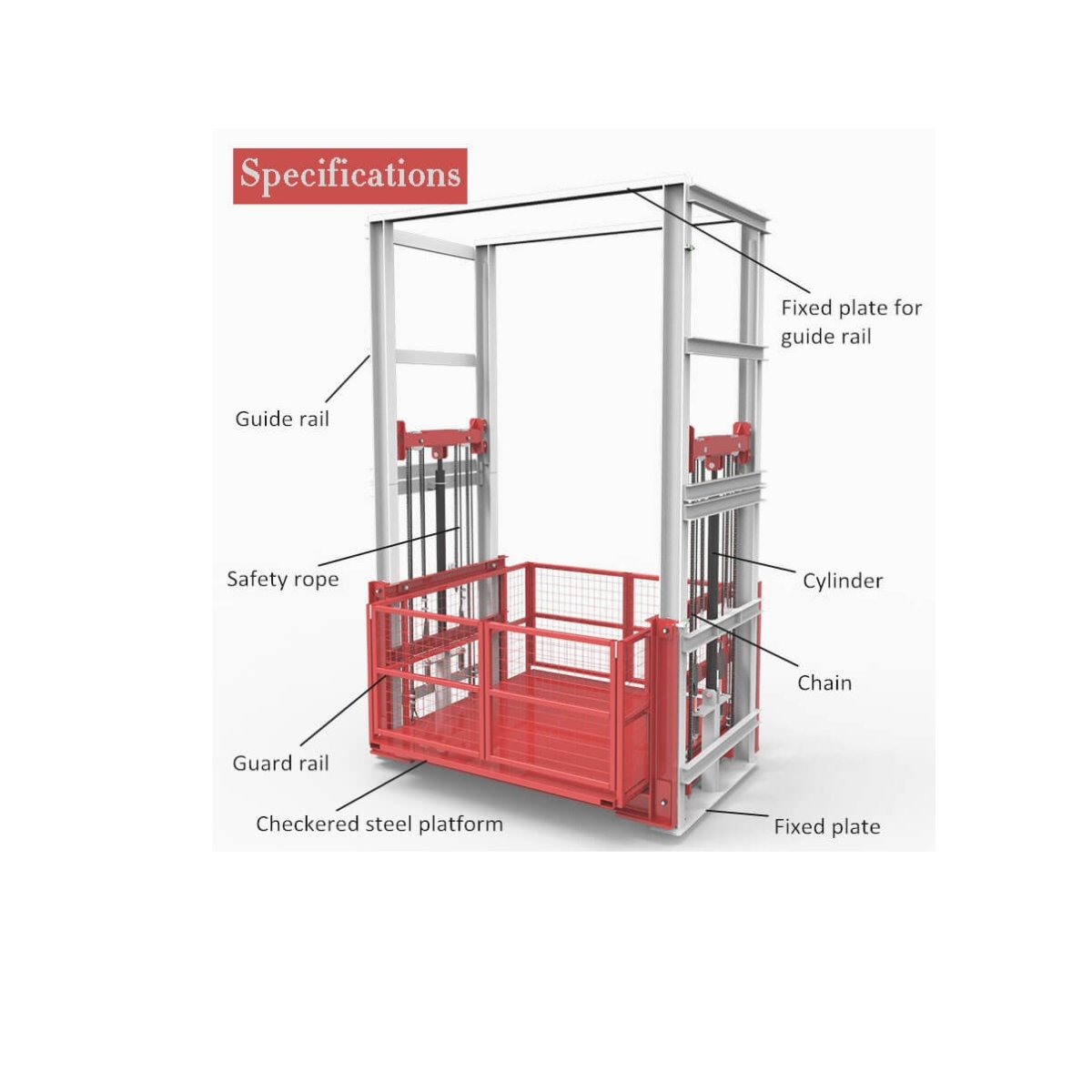
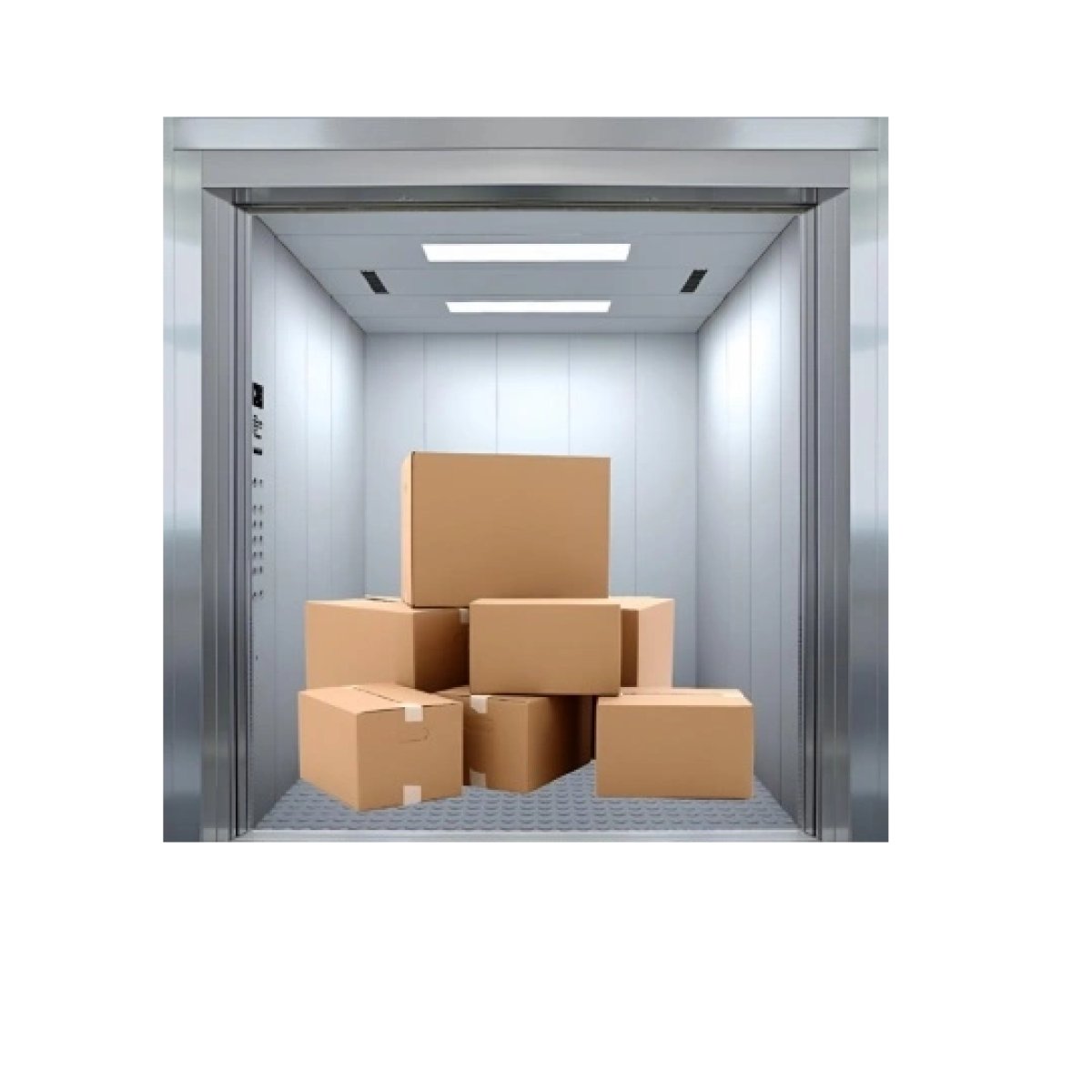
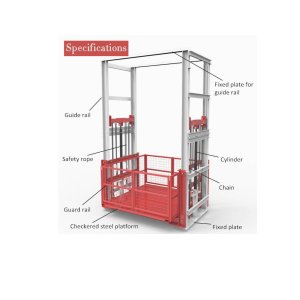
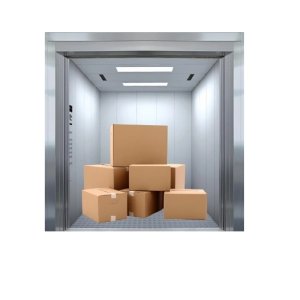
A Goods (Freight) Lift is a heavy-duty, ruggedly engineered vertical transport system designed specifically to move cargo, palletized freight, vehicles, and heavy industrial materials between building levels. Prioritizing material capacity, structural durability, and loading-dock utility over aesthetics and high travel speeds, these lifts rely on high-yield steel construction, high-torque traction or heavy hydraulic pistons, and specialized door configurations to withstand intense impacts and structural stresses.
1. Structural Classifications & Loading Modes
Unlike passenger lifts that carry relatively uniform, self-distributed human loads, freight lifts must handle concentrated, off-center forces during loading and unloading. The ASME A17.1 (and international equivalent EN 81-20) codes categorize freight lifts into distinct structural classes based on their intended loading mechanics:
Class A (General Freight Loading): Designed for standard cargo where the weight of any single piece of freight is not greater than $25\%$ of the rated capacity of the lift. Loading is typically executed via hand trucks or manual labor.
Class B (Motor Vehicle Loading): Engineered explicitly to transport passenger automobiles, delivery trucks, or forklifts inside parking garages or automotive manufacturing facilities.
Class C (Industrial Truck Loading): The highest structural tier, where heavy electric forklifts or industrial trucks are driven directly into the lift cab to deposit palletized freight. The structural chassis, platform, and guide rails are heavily reinforced to withstand severe static and dynamic structural bending moments:
Class C1: Industrial truck can ride in the lift with the load.
Class C2: Industrial truck only loads the cab but does not travel with it.
Class C3: Heavy concentrated loads exceeding standard ratings (e.g., heavy industrial machinery).
2. Mechanical Design & Architectural Differences
To handle immense capacities—frequently ranging from 2,000 kg to over 10,000 kg—the engineering architecture of a freight lift departs significantly from commercial passenger models.Vertical Bi-Parting Doors
While passenger lifts utilize horizontal sliding doors, heavy freight lifts rely almost exclusively on counterbalanced vertical bi-parting doors. The top half of the gate slides up into the hoistway, while the bottom half drops down flush with the building floor sill. This creates a solid, structural landing ledge that can support heavy wheeled traffic rolling into the cab and prevents horizontal door tracks from being crushed or bent by forklifts.
Reinforced Cab Interior
Aesthetic glass and wood veneers are replaced with heavy-gauge, non-skid checkered steel floor plating and solid structural steel wall panels. Cab walls are frequently lined with thick hardwood or high-density polyethylene (HDPE) bumper strips to absorb frequent impacts from stray pallets or heavy machinery.
Low-Speed, High-Torque Propulsion
Freight lifts are built for raw lifting power rather than speed. They generally operate at modest speeds ($0.25\text{ m/s to } 1.0\text{ m/s}$). For low-to-mid-rise industrial warehouses, Heavy-Duty Direct Hydraulic or Telescopic Hydraulic cylinders are preferred because they transfer the intense downward force of the load directly into the building's concrete foundation pit rather than hanging the stress from the building's overhead structural steel frame.
3. Safety Protocols & Operational Interlocks
Operating a freight lift involves stringent safety controls to protect material handlers and facility infrastructure.
Constant-Pressure Controls: In many industrial freight setups, the cab controls require "constant pressure" (dead-man switches) to move the lift rather than single-touch automatic buttons. If an operator lets go of the button, the lift instantly stops, preventing accidents if cargo shifts mid-transit.
The Truck Zone Leveling Logic: When an exceptionally heavy forklift drives onto the elevator platform, the sudden shift in weight compresses the hydraulic fluid or stretches the steel hoisting cables, causing the platform to sag slightly below the warehouse floor level. Freight lifts feature an automatic Micro-Leveling (Truck Zone) system. It detects this localized displacement and dynamically pumps fluid or ticks the traction motor to keep the lift perfectly level with the dock floor during loading, preventing forklift tips.
Strict Gate Interlocking: Vertical doors utilize mechanical rotoclap locks and electrical safety switches. The lift is completely immobilized unless the gate is fully closed and locked. In tandem, an electronic light curtain or mechanical safety edge stops the heavy vertical doors instantly if a piece of cargo is jutting out past the threshold.