
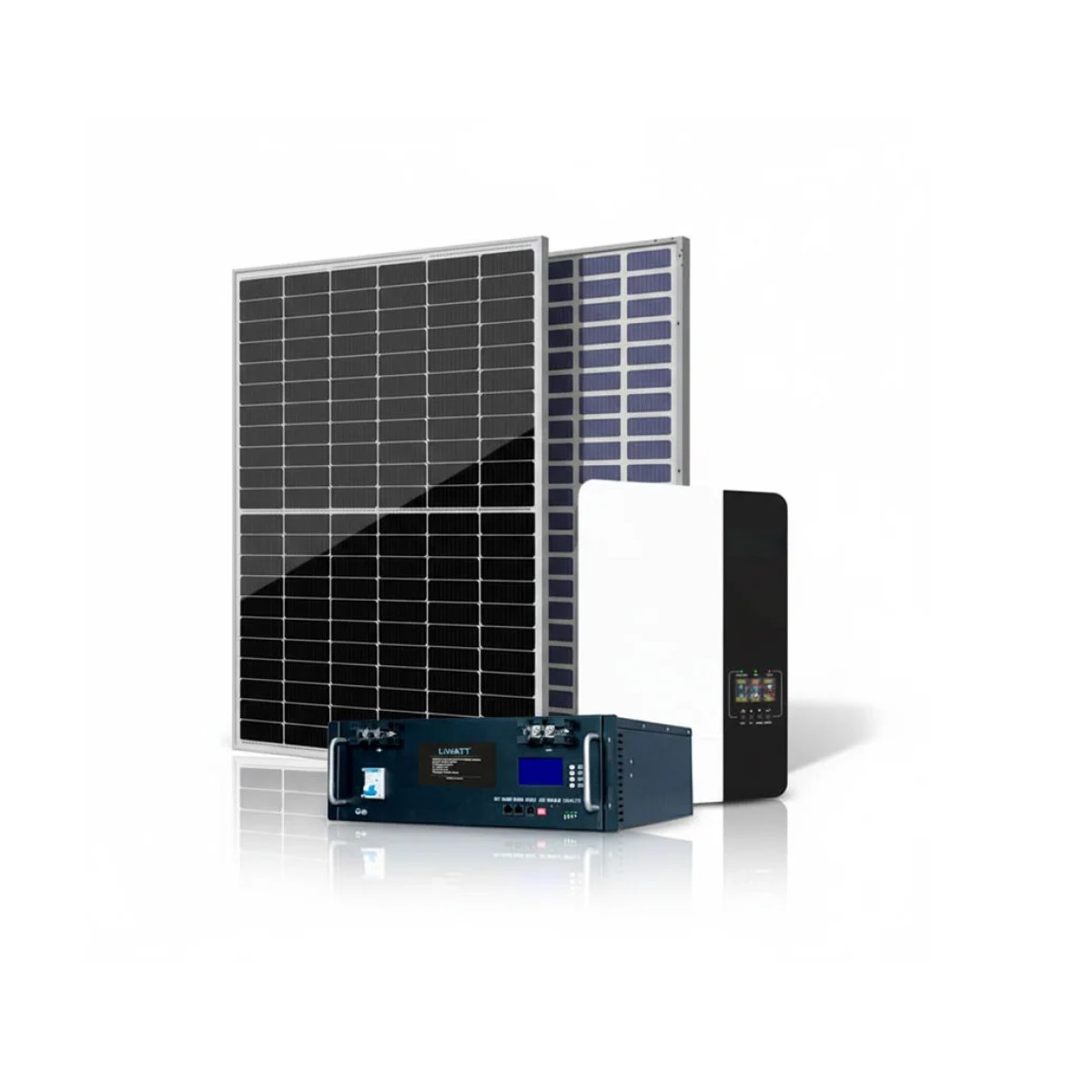
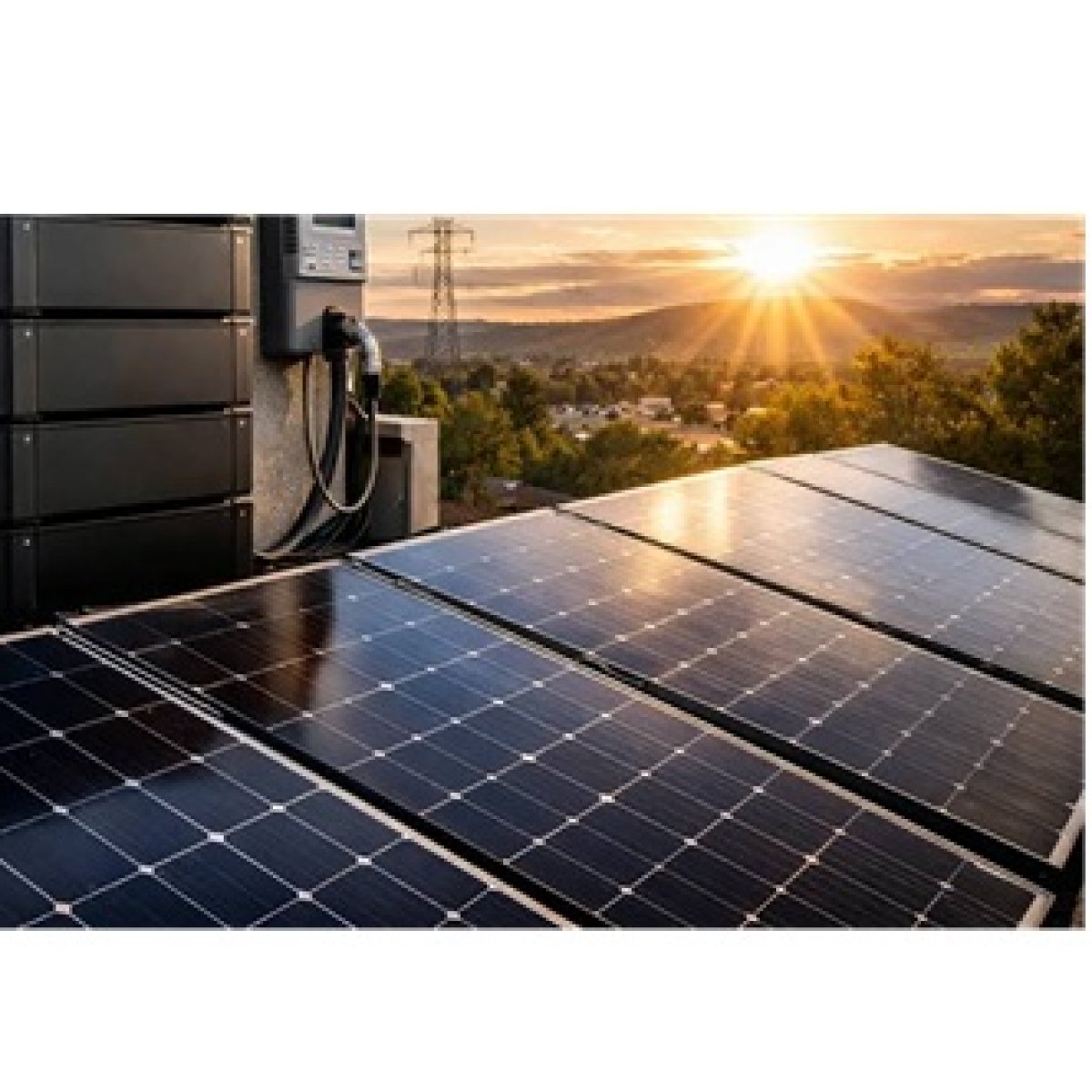
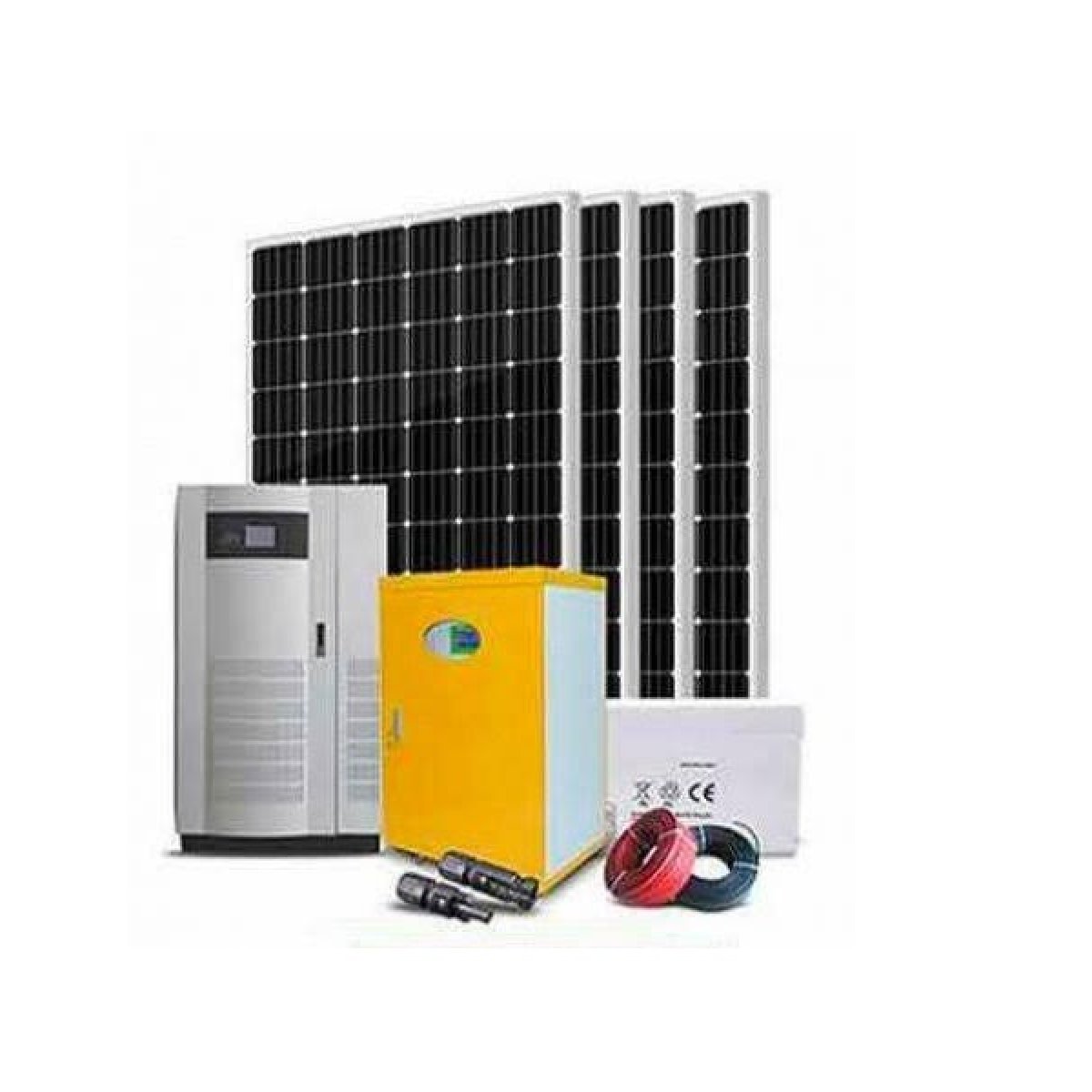
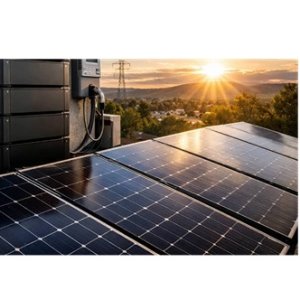
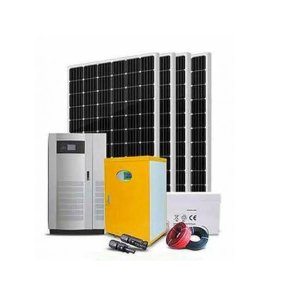
A Hybrid Solar System combines the characteristics of both on-grid and off-grid configurations into a single, highly flexible power network. It remains connected to the public utility grid to enable net metering and seamless power sourcing, while simultaneously integrating a dedicated battery storage bank. This dual-capability ensures the building maintains continuous backup power during utility blackouts while utilizing smart software to optimize electricity costs based on real-time utility rates.
1. System Architecture & The Intelligent Hybrid Inverter
The operational hub of a hybrid configuration is the Hybrid Inverter (sometimes called a Multi-Mode Inverter). Unlike standard grid-tied or standalone inverters, a hybrid unit manages three distinct power inputs/outputs simultaneously: the solar array, the battery storage bank, and the utility grid.
Dynamic Power Routing: The inverter acts as a digital traffic controller. It directs solar-generated Direct Current ($DC$) to an internal busbar, where it can be converted to Alternating Current ($AC$) for immediate home consumption, sent to the battery bank for storage, or exported directly out to the utility grid.
The Split-Load Panel Layout: To protect battery reserves during an extended grid outage, the facility's electrical system is structurally split into two panels:
Main Distribution Panel (Non-Critical Loads): Houses heavy power draws like central air conditioning or EV chargers. These remain grid-dependent and turn off during a blackout to prevent draining the battery instantly.
Critical Loads Panel (Essential Backup): Isolated via an internal Automatic Transfer Switch (ATS) inside or adjacent to the hybrid inverter. This powers essential assets like refrigerators, Wi-Fi routers, medical devices, and lighting circuits during an outage.
2. Advanced Software Optimization Modes
Hybrid systems use intelligent software tracking to shift operational modes dynamically throughout the day, maximizing financial returns based on the local utility's billing structure.
Self-Consumption Mode: Optimized for regions with standard or unfavorable net-metering rates. Instead of exporting excess daytime solar energy to the grid for a low credit, the hybrid inverter directs $100\%$ of the surplus into the local battery bank. At night, rather than purchasing expensive power from the grid, the building runs entirely off its stored solar reserves until the batteries reach a pre-set safety threshold.
Time-of-Use (ToU) Optimization (Peak Shaving): In markets where utilities charge varying electricity rates based on the time of day (e.g., expensive "Peak" pricing from 4 PM to 9 PM), the hybrid system engages in rate arbitrage. It charges the battery bank using cheap solar power (or off-peak grid power) during the day. The exact moment the utility hits expensive peak rates, the system switches the building over to battery power, completely shielding the owner from high electric rates.
Battery Backup Mode (Storm Watch): The system connects to digital weather tracking networks. If a severe storm or high-wind advisory is flagged, the inverter automatically overrides daily financial optimization modes, drawing power from both the solar panels and the grid to charge the battery bank to $100\%$ capacity in anticipation of a localized utility blackout.
3. Automatic Islanding & Microgrid Isolation
A core limitation of a standard on-grid system is that it must shut down entirely during a blackout to prevent back-feeding live electricity into downed power lines (Anti-Islanding Protection). A hybrid system circumvents this limitation safely through physical circuit isolation:
The instant the utility grid loses voltage, the hybrid inverter’s internal high-speed transfer switch opens, physically severing the connection to the municipal grid lines. This transforms the building's critical load panel and battery bank into an isolated, self-sustaining Microgrid (Island Mode).
Because the grid is safely disconnected, the solar panels can continue generating power to run the house and recharge the batteries during the day, maintaining indefinite off-grid survival capabilities until the main grid infrastructure is repaired and stabilized.