
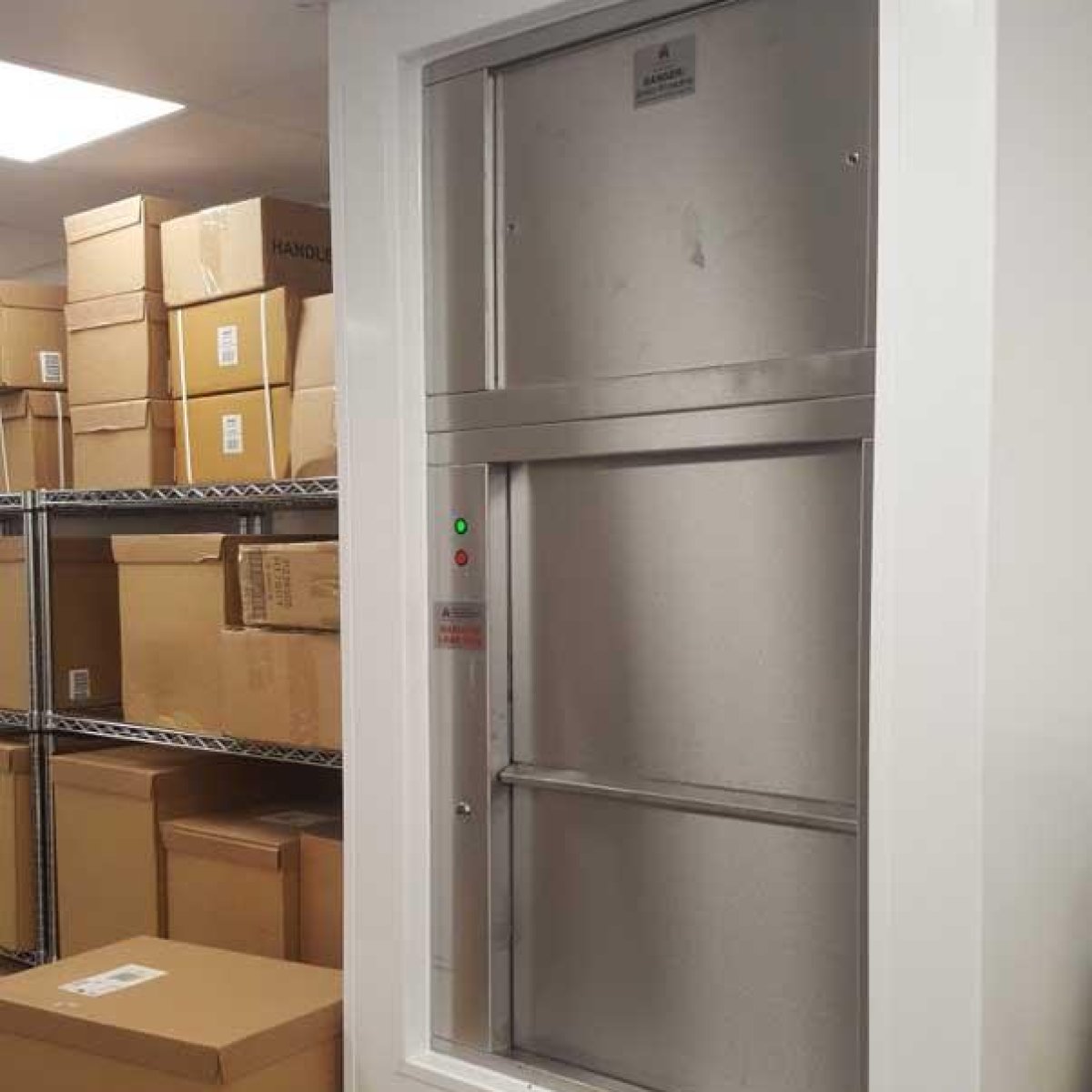
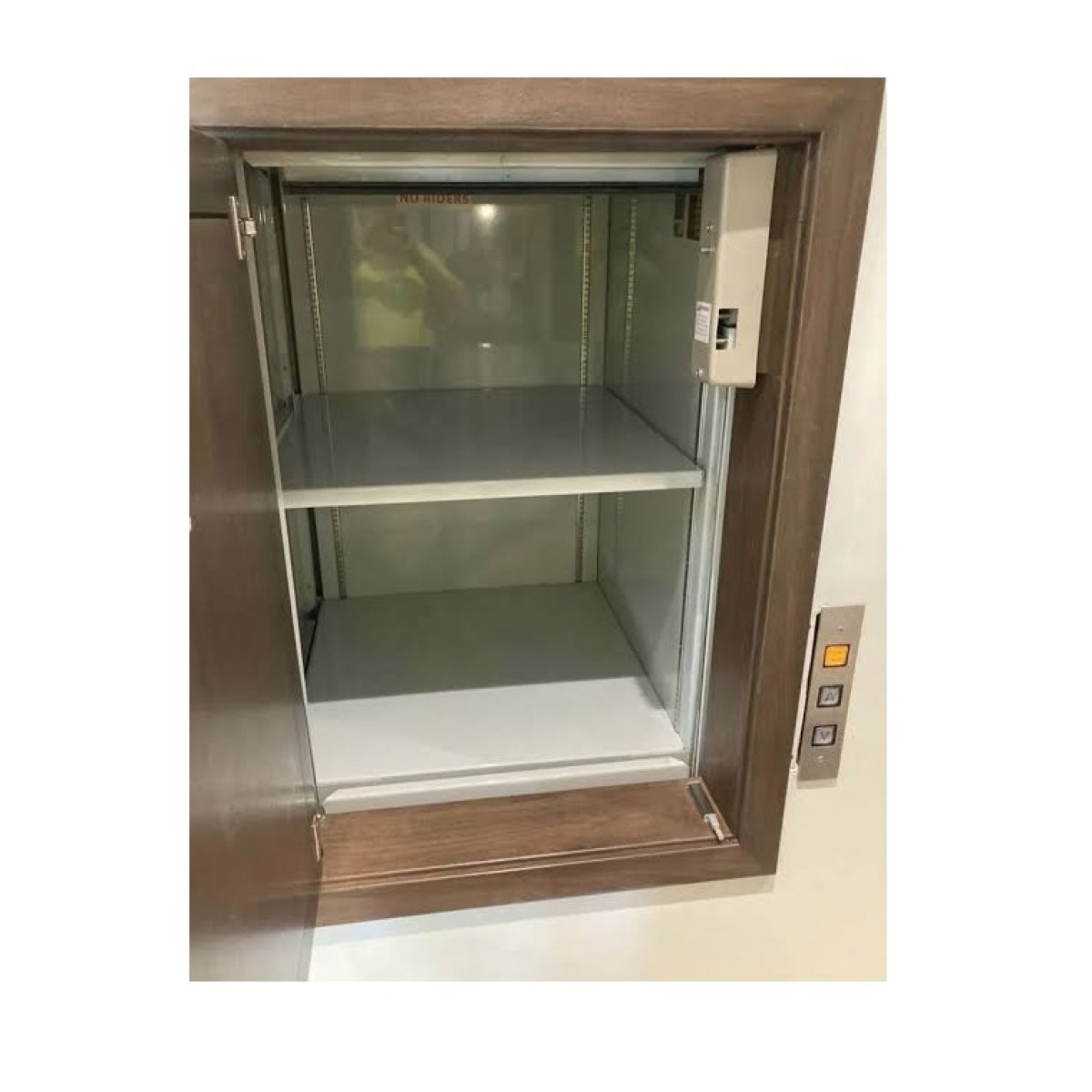
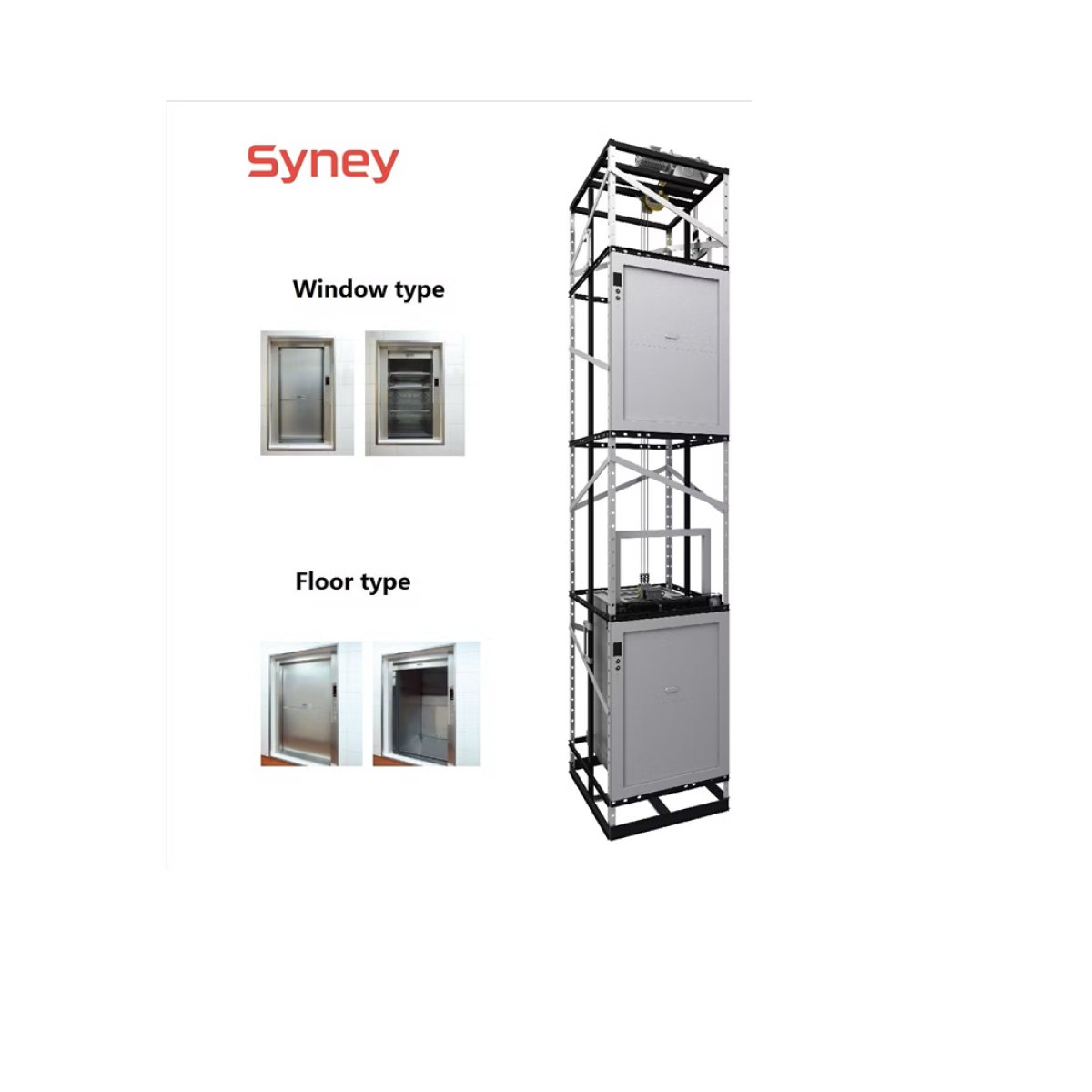
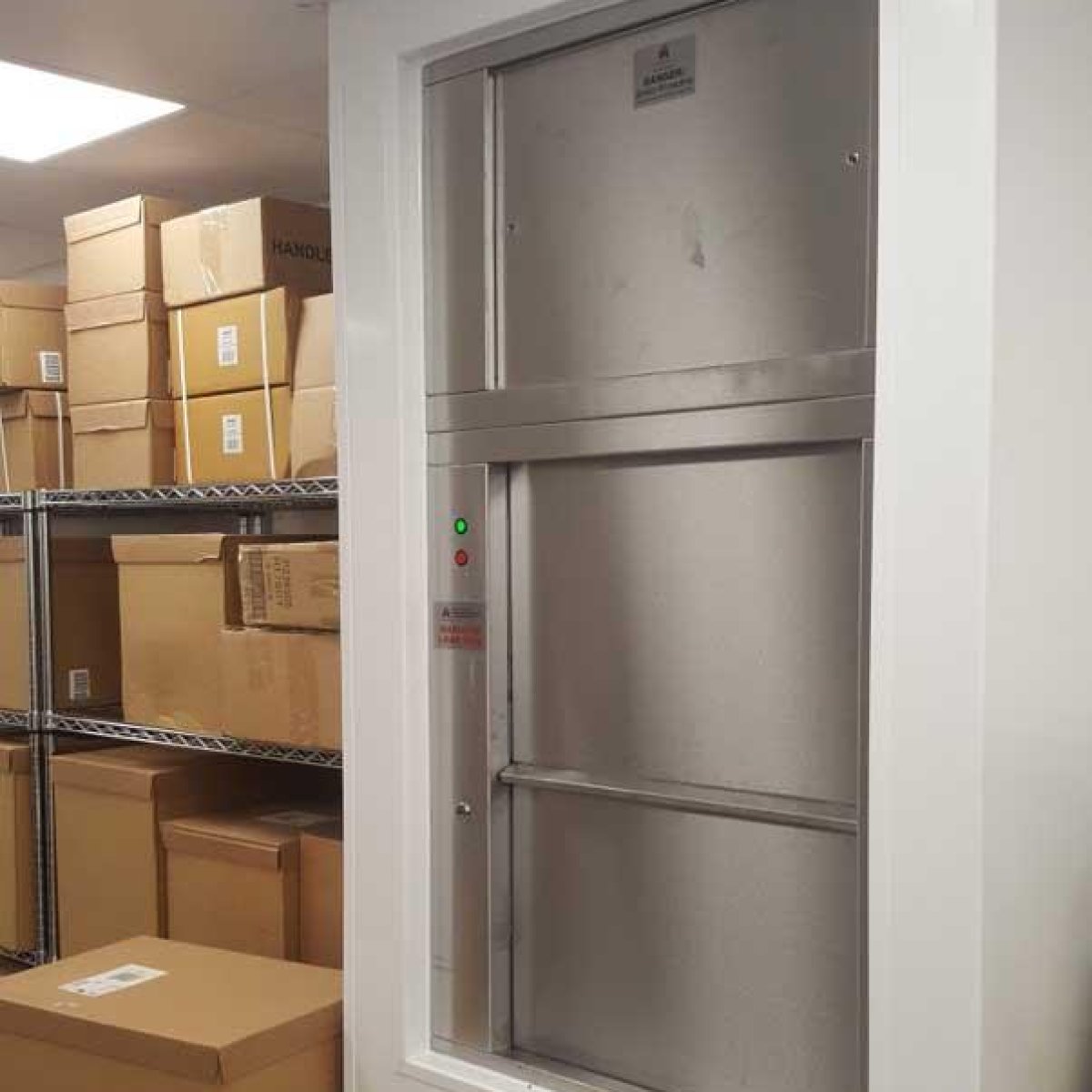
A Dumbwaiter is a compact, specialized vertical transport system designed exclusively to move inanimate objects—such as food, laundry, medical supplies, documents, or heavy carted goods—between building floors. Operating as a scaled-down version of a freight elevator, dumbwaiters are legally and structurally restricted to prevent human occupancy, utilizing small-footprint electric traction or hydraulic drive networks to optimize operational efficiency in hospitality, healthcare, residential, and commercial environments.
1. System Engineering & Structural Constraints
Because dumbwaiters are strictly intended for cargo and completely prohibited for human transport, they are governed by unique engineering and regulatory limits (such as the ASME A17.1 code in North America or EN 81-3 in Europe).
Dimensional Boundaries: To make it physically impossible for a person to ride inside, codes strictly limit the internal cab dimensions. The maximum platform area is typically restricted to 0.84 square meters (9 square feet), and the internal net height cannot exceed 1.2 meters (4 feet). Total volume is capped at roughly $1\text{ m}^3$.
Weight Capacities: Dumbwaiters are engineered across a standard structural spectrum, ranging from light-duty residential units (25 kg to 50 kg) for groceries and firewood, up to heavy-duty industrial models (100 kg to 250 kg) designed to move loaded stainless steel dietary carts or industrial parts.
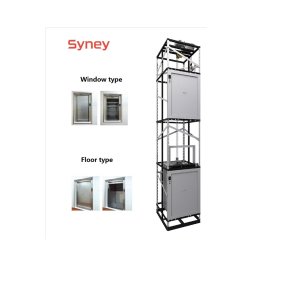
Propulsion Systems: Modern dumbwaiters utilize Machine Roomless (MRL) technology. A compact electric winding drum or traction drive motor is mounted directly inside the top or bottom of the existing guide rail shaft, eliminating the need for a separate mechanical penthouse room.
2. Commercial Application Variations
While the core mechanical principles remain uniform, the interior finishing and operational logic of a dumbwaiter are tailored to its specific facility ecosystem.Hospitality & Food Service (The Restuarant Dumbwaiter)
Used to transport hot food from basement kitchens to upper-level dining rooms, and return dirty dishware.
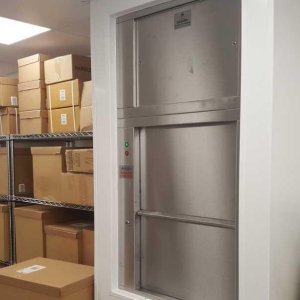
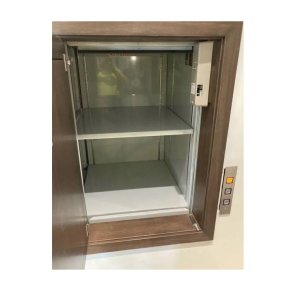
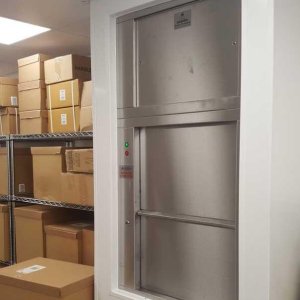
Specifications: The entire cab interior, doors, and shelves are constructed from high-grade, polished 304 Stainless Steel to comply with strict public health codes. They often feature integrated thermal heating strips or heated cabinet arrays to maintain food temperatures mid-transit, along with removable stainless steel shelves for easy sanitization.
Healthcare & Laboratory Environments
Deployed in multi-level hospitals and clinics to move sterile instruments, biohazard samples, pharmaceuticals, or patient records.
Specifications: These units incorporate advanced micro-filtration or dust-sealed enclosures. They frequently utilize automated, touchless slide-open doors and are integrated into the hospital's central security network to restrict access to sensitive floors (like pharmacies or cleanrooms) via keycard or biometric scanning.
Retail & Corporate Logistics
Used in multi-story department stores, banks, and legal offices to move heavy boxes of stock, coin bags, or dense paper archives.
Specifications: These prioritize raw weight capacity over aesthetic finish, often utilizing heavy-duty powder-coated steel panels and floor-level roll-in configurations so stock carts can be wheeled straight into the cab without lifting.
3. Safety Controls & Operational Interface
Despite their small size, dumbwaiters utilize rigorous mechanical and electrical interlocks to protect staff and maintain facility safety.
Hoistway Door Interlocks: The most critical safety component. Every landing access door features a mechanical rotoclap lock and an electrical safety switch. The dumbwaiter car is completely immobilized if any door in the building is unlatched or open even a fraction of an inch, preventing staff from reaching into a moving shaft or falling down an open hoistway.
"Car Present" & "In-Use" Logic: The push-button control panels at each floor feature illuminated status indicator lights. The system alerts users when the cab is running ("In-Use") and when it has safely arrived at their floor ("Car Present").
Slack-Rope Safety Devices: If an item jams inside the shaft and stops the cab while the motor keeps spinning, the hoisting cables will go slack. An integrated mechanical slack-rope sensor instantly detects this drop in tension and cuts all electrical power to the drive motor, preventing cable tangles, snaps, or structural motor burnouts.