
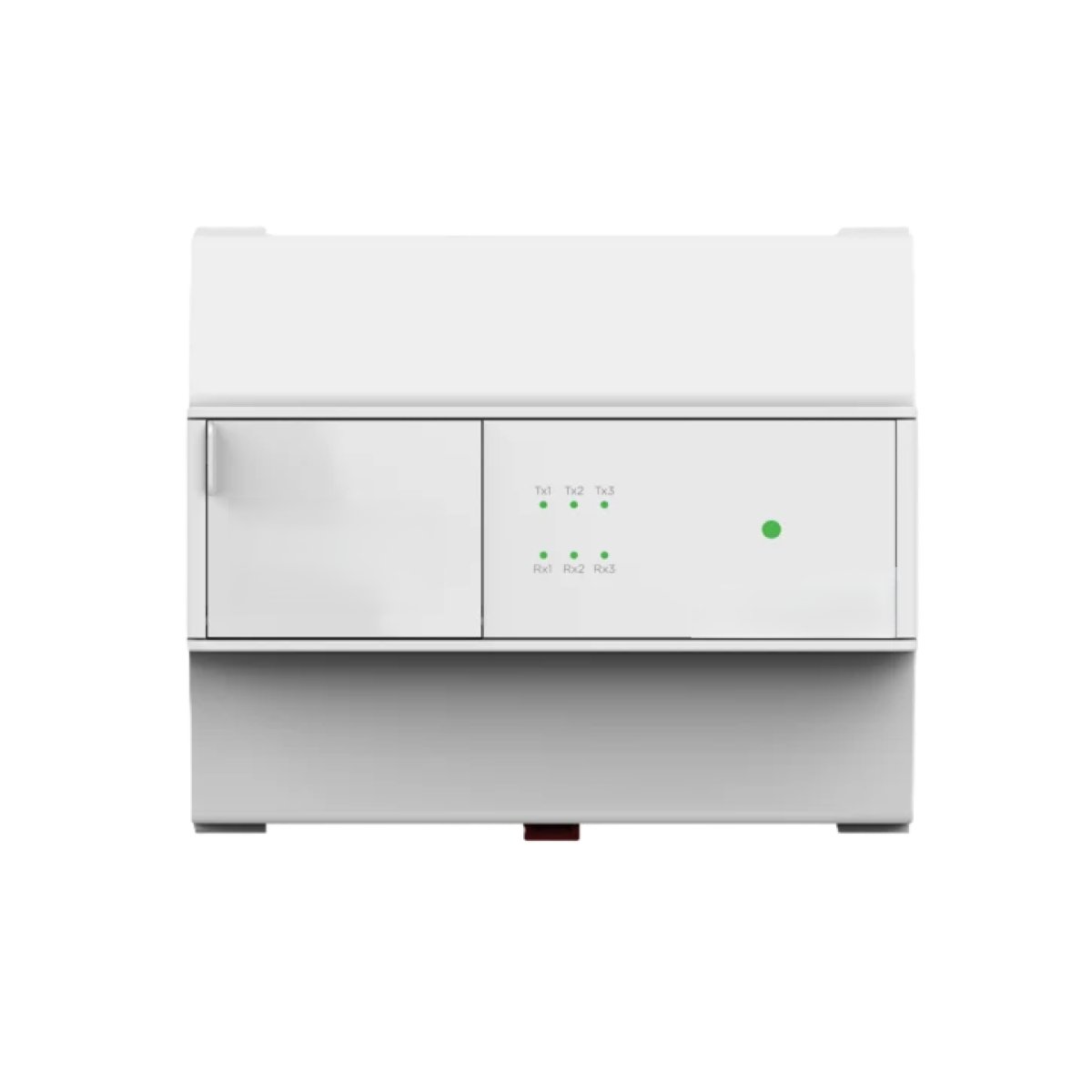
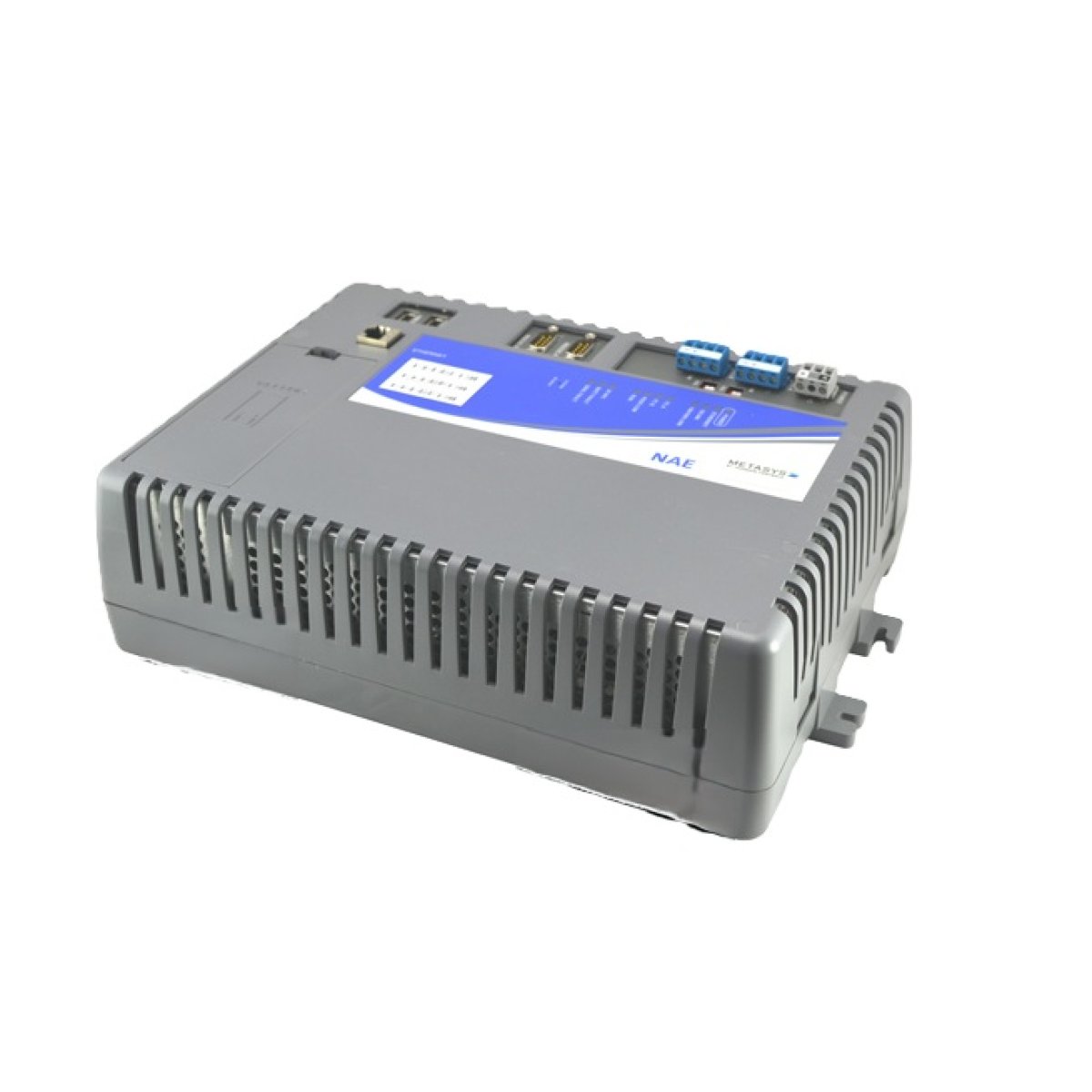
The translation and supervisory hub for unified facility management.
Network Automation Engines (NAE) and Gateways act as intelligent network bridges. They collect data from scattered, multi-protocol field controllers (like HVAC, lighting, and security systems), normalize the data into a single web-friendly standard, and provide centralized scheduling, alarming, and remote cloud access.
In any modern building, equipment comes from different manufacturers, speaking different digital "languages" (protocols) over different wires. A chiller might speak Modbus, variable air volume (VAV) boxes might speak BACnet MS/TP, and a lighting system might run on LonWorks.
An NAE / Gateway is a high-level supervisory controller that connects to these diverse field networks simultaneously. It ingests all conflicting protocols, translates them into uniform IT standard packets (like BACnet/IP or Web Services), and serves them up to a localized webpage or a centralized cloud server. It acts as both a language translator and a traffic cop for building intelligence.
Key FunctionsProtocol Translation (The Gateway Role): Converts low-level field network protocols (RS-485 serial, N2, LonWorks) into IT-friendly Ethernet/IP protocols.
Supervisory Logic & Coordination: Manages global building schedules (e.g., turning off all facility lights and reducing HVAC airflow across 50 independent zones at 6:00 PM).
Embedded Web Server: Hosts a direct graphical user interface (GUI). Users can log straight into the engine via a standard web browser to command equipment or adjust setpoints without requiring specialized client software.
Data Logging, Alarming, and Trending: Aggregates and stores long-term historical data, pushing real-time critical alarms (e.g., server room temperature spikes) out to technicians via email or text.
To see where NAEs/Gateways sit compared to the hardware we discussed previously:
System LayerDevice TypePrimary FunctionManagement / Cloud LayerWorkstations, Mobile Apps, Cloud UIHigh-level data visualization, long-term analytics, multi-site comparison.Supervisory LayerNAEs / GatewaysProtocol translation, global scheduling, web serving, site-wide coordination.Field Control LayerDDCs, PLCs, Expansion ModulesExecution of real-time physical logic (loops), direct reading of sensors, and firing of actuators.