
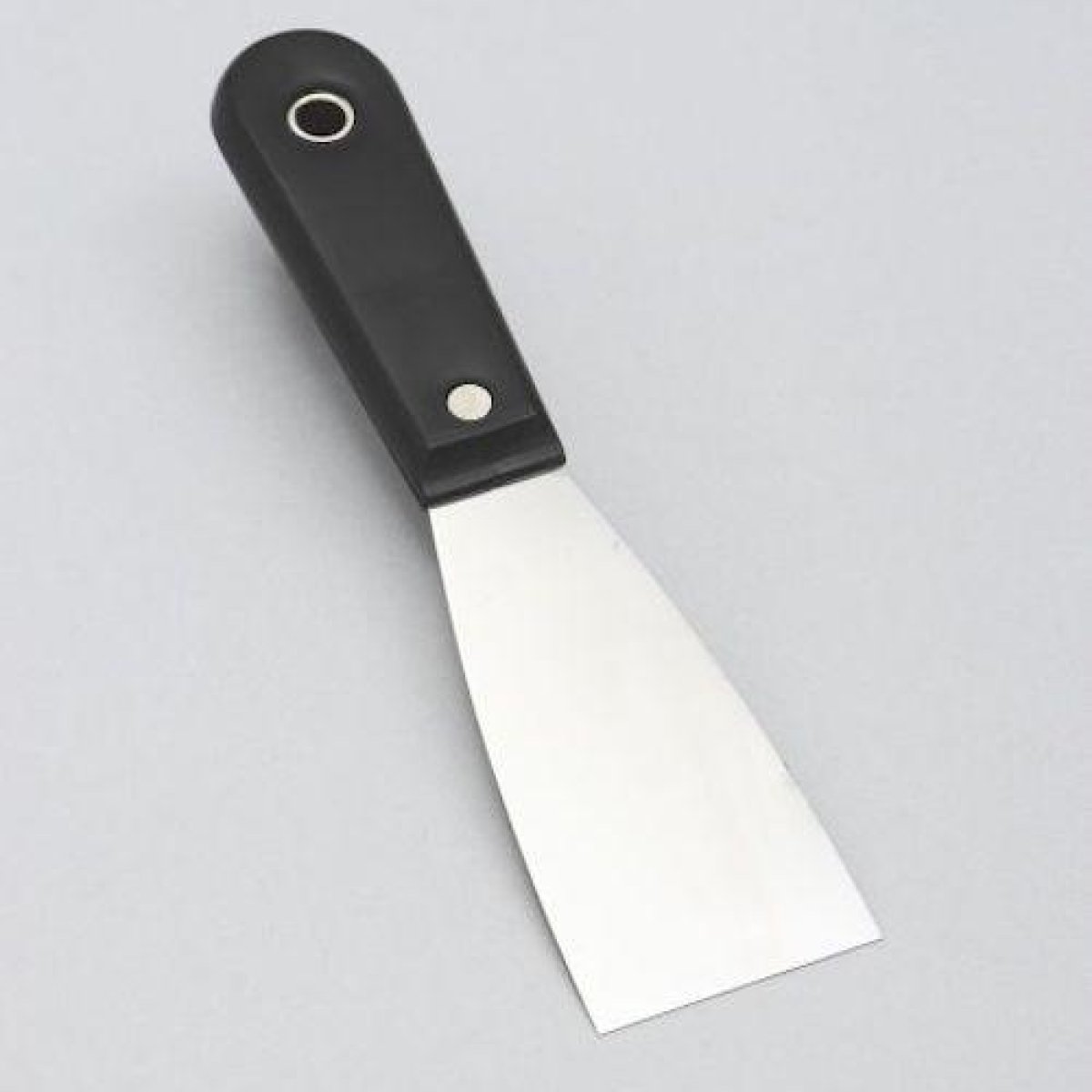
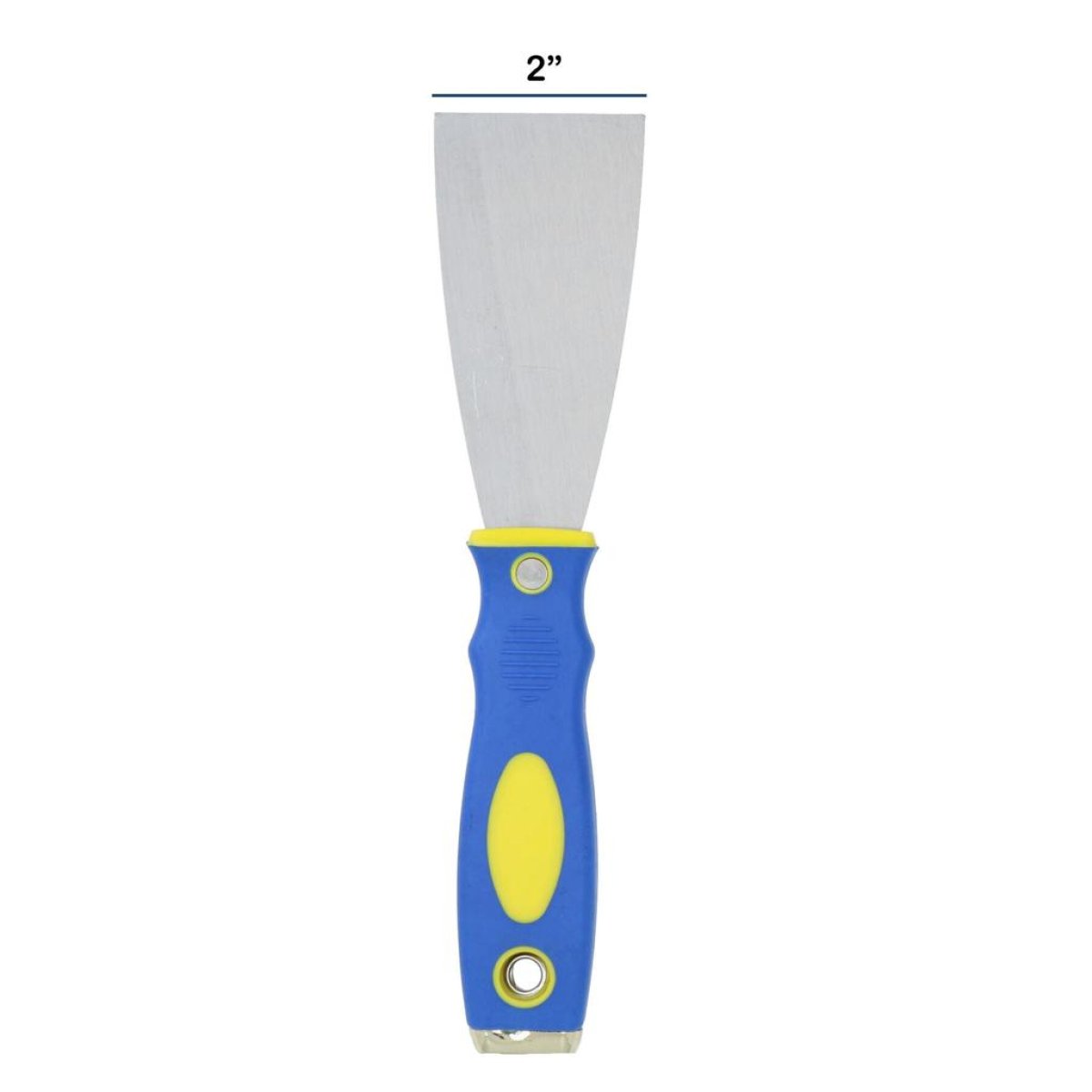
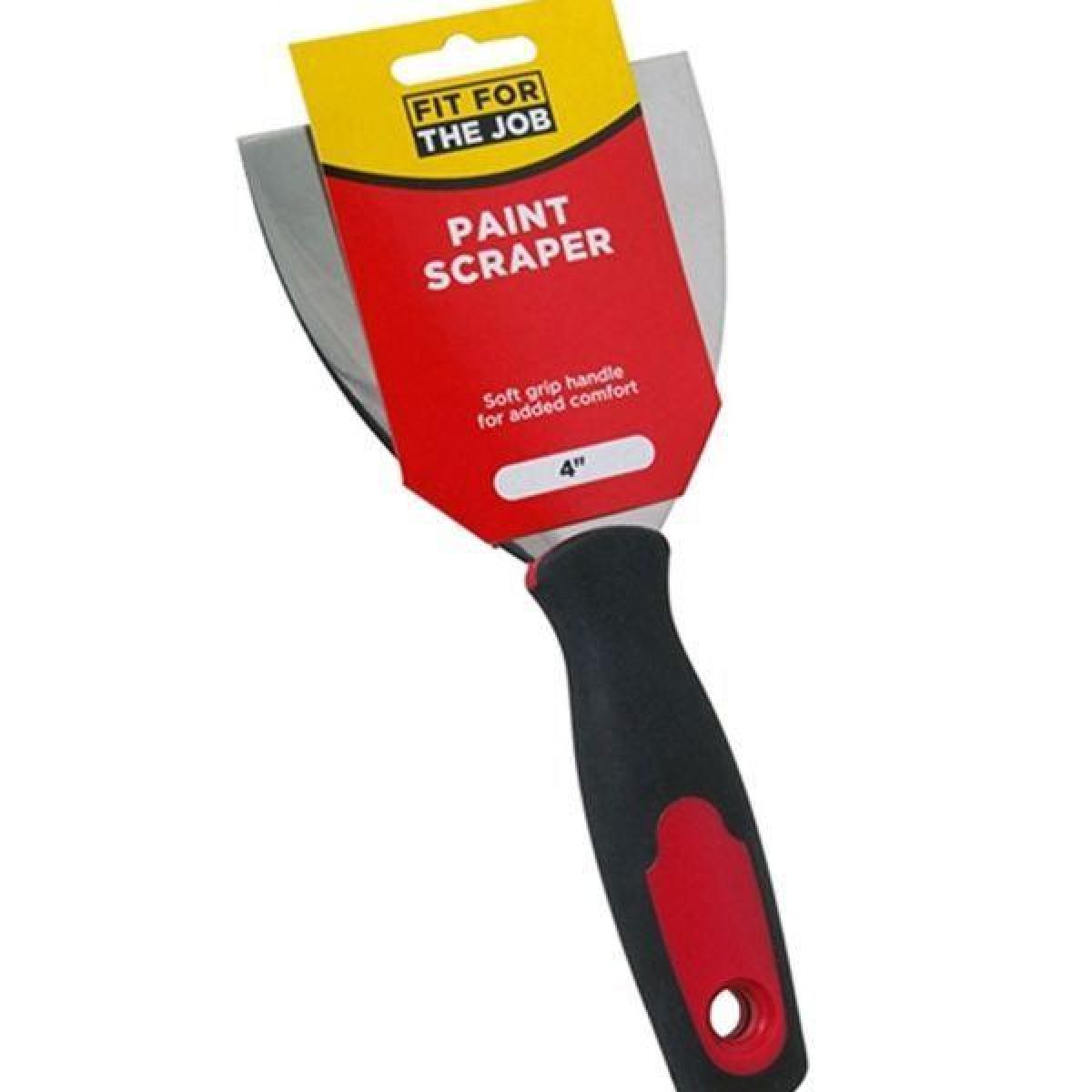
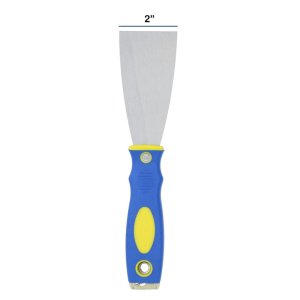
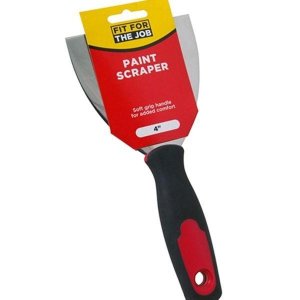
A Paint Scraper is a hand-held mechanical demolition tool engineered to shear away failed, degraded, or unwanted layers of paint, varnish, or rust from a solid substrate (typically wood, metal, or masonry). Operating as a Class-1 Lever that applies an inclined plane cutting edge to a surface, a scraper relies on high-hardness blade materials—ranging from high-carbon spring steel to ultra-hard tungsten carbide—to fracture the adhesive bond between the coating and the underlying surface without gouging the substrate.
1. Blade Metallurgy & Edge Retention Physics
The mechanical efficiency of a paint scraper is fundamentally governed by the material science of its blade. Because scraping requires dragging a rigid edge against highly abrasive, hardened paint films, material selection dictates how long a tool can perform before dulling or damaging the work surface.
High-Carbon Carbon Steel Blades: Standard flexible and rigid putty-style scrapers use hardened carbon steel. These blades are cost-effective and can be easily re-sharpened in the field using a metal file. However, they dull rapidly when exposed to thick, old lead paints or dense varnishes, requiring frequent maintenance to prevent the edge from rounding over.
Tungsten Carbide Blades: Premium precision scrapers feature indexable blades manufactured from sintered Tungsten Carbide ($\text{WC}$).
Mechanical Advantages: Tungsten carbide matches the hardness of diamond or sapphire, outlasting carbon steel blades by up to 50 to 100 times.
The Fracturing Action: Because carbide holds a perfectly sharp, micro-honed edge indefinitely, it cleanly fractures the bond line of the brittle paint through sheer compressive force rather than relying on human muscular pulling power.
2. Core Configurations & Geometry
Paint scrapers are split into distinct physical geometries designed to handle varying leverage loads and surface profiles.
Heavy-Duty Pull Scrapers (Draw Scrapers)
Designed with a thick, ergonomic handle (frequently incorporating a secondary hand knob) where the blade is positioned at an angle perpendicular to the handle shaft.
The Mechanical Action: The operator uses two hands to pull the scraper toward their body. This layout allows the user to apply their full upper-body weight as a downward force directly onto the cutting edge, maximizing the mechanical shear force applied to thick, multi-layered exterior coatings.
Push Scrapers (Putty Knife / Chisel Style)
Features a straight, flat blade aligned parallel with the handle.
The Mechanical Action: The operator pushes the blade forward underneath the edge of peeling paint. These tools rely on a slight flex in the steel blade to slide flat along the substrate, separating loose, lifting paint flakes without gouging into soft wood grain.
Profile & Contour Scrapers
Specialized handles utilizing interchangeable, multi-sided blades shaped into teardrop, triangular, concave, or convex geometries.
Objective: Essential for restorative molding work, allowing architectural conservators to scrape paint out of delicate curves, colonial beads, and complex wood-turning channels without flattening the historic profiles.
3. Core Operational Metrics & Risk Mitigation
Selecting and utilizing a paint scraper requires matching the blade shape and applied force to the specific hardness of the target substrate.
Operational FactorMechanical RiskEngineering MitigationBlade Corner RadiusSharp $90^\circ$ outer blade corners can slice into wood, leaving deep structural gouges.Premium scrapers utilize blades with slightly chamfered or rounded outer corners to ensure only the flat belly of the blade interfaces with the surface.Applied AngulationHolding a pull scraper at too steep an angle causes the blade to chatter, vibrate, and bounce.The blade must be held at a consistent $30^\circ \text{ to } 45^\circ$ relief angle relative to the vertical plane to maintain clean, continuous shaving action.Substrate TemperatureBrittle, cold paint films possess high shear resistance, increasing workload.Pairing the mechanical scraper with an Infrared (IR) Paint Heat Gun to soften the polymer matrix of the paint to a pliable state before drawing the blade.