
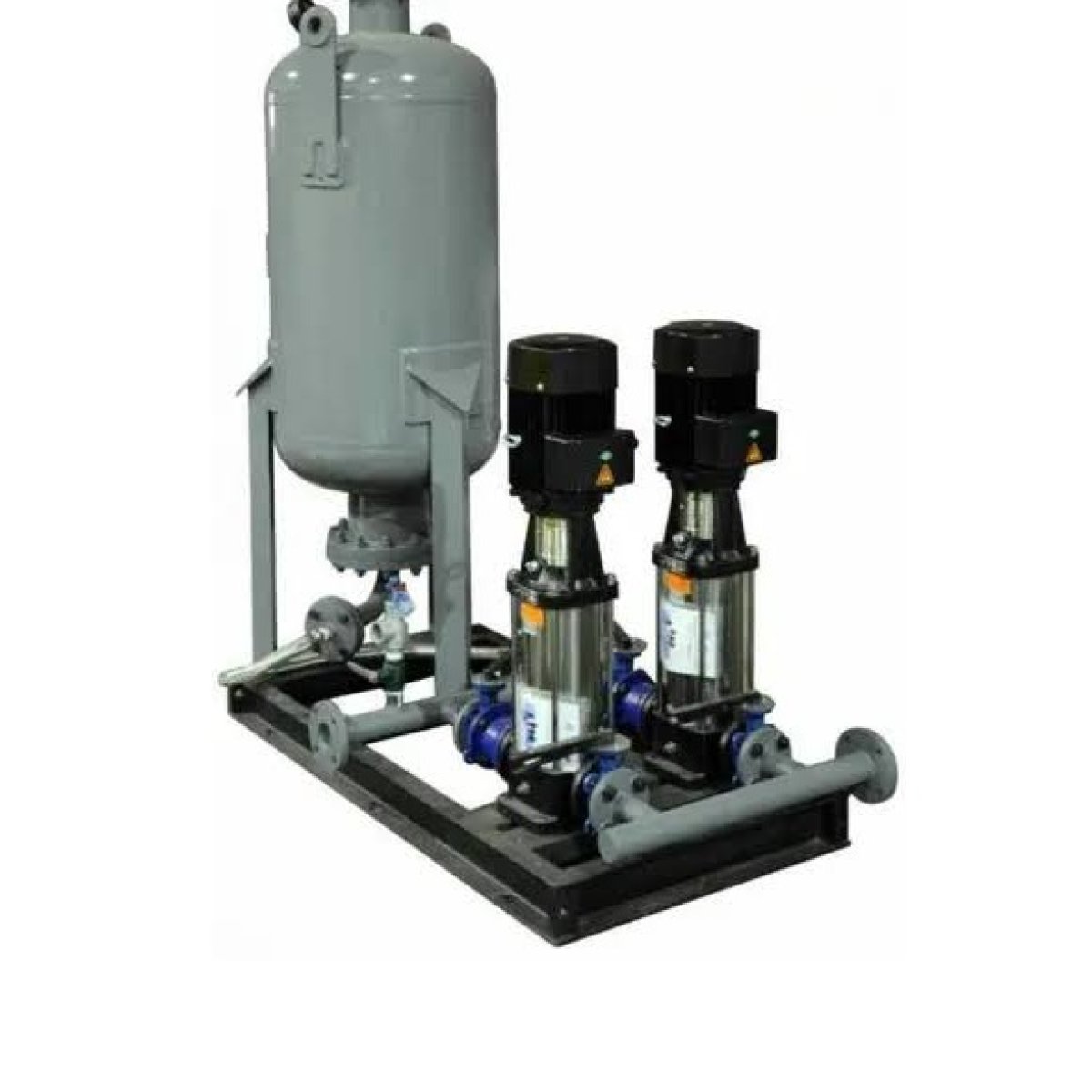
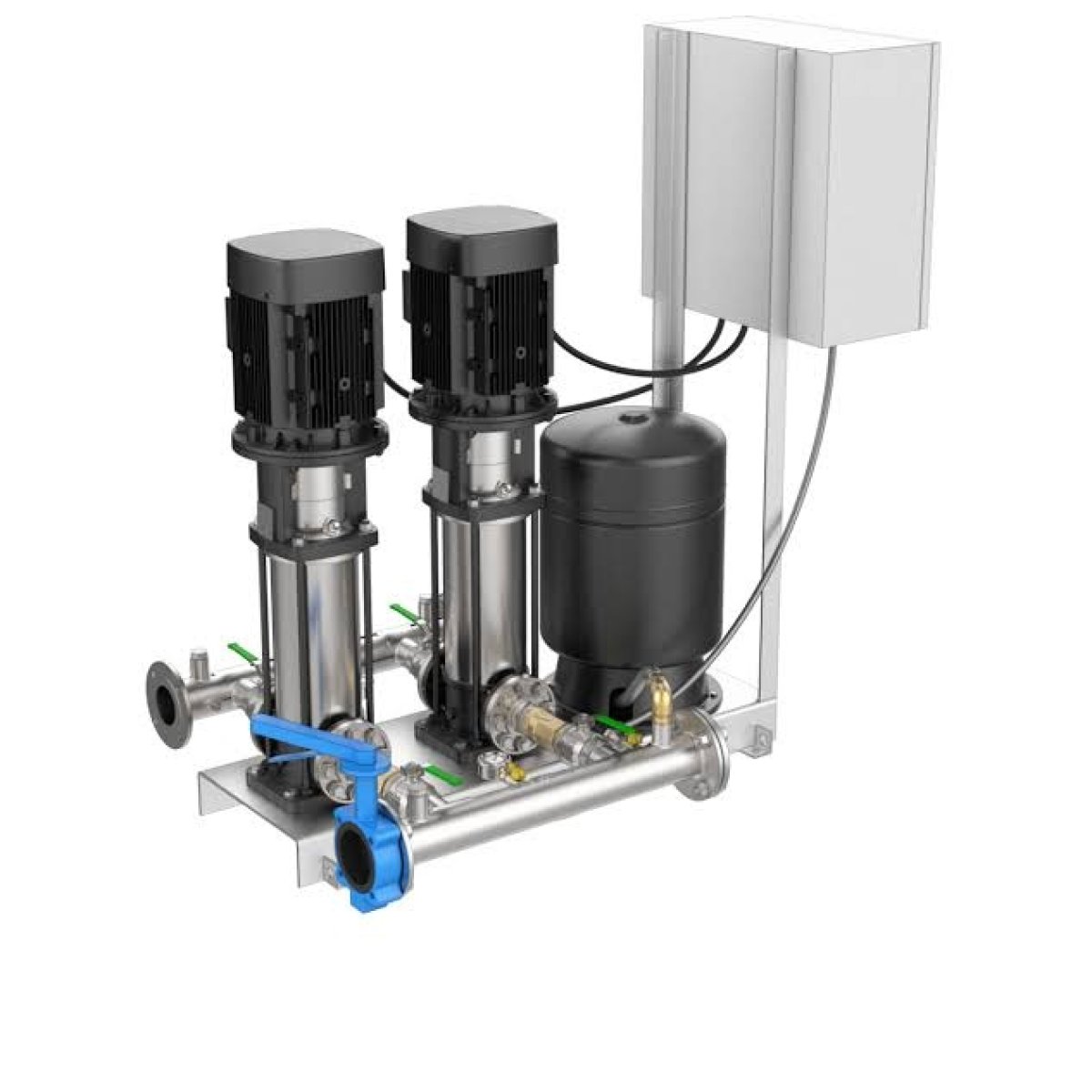
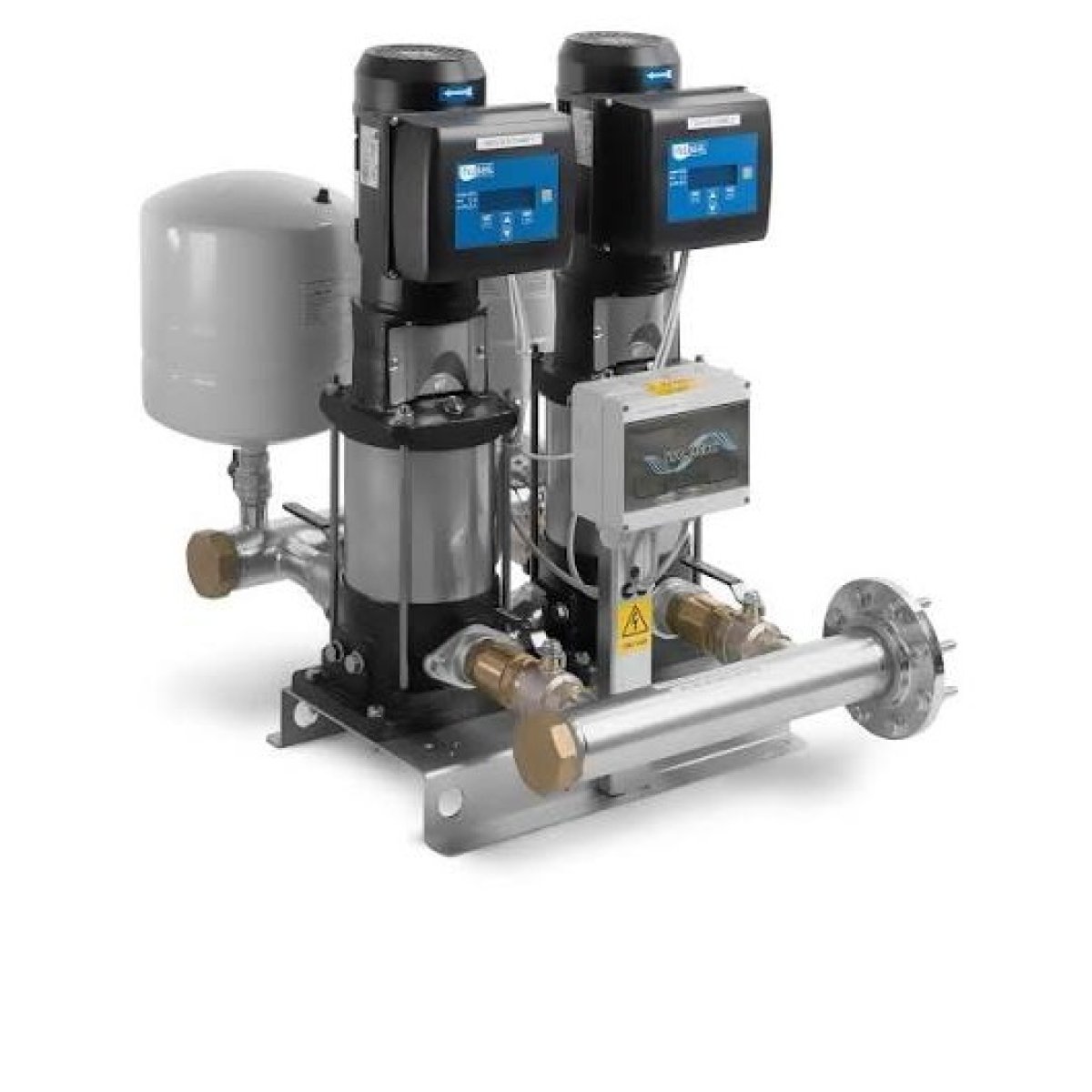
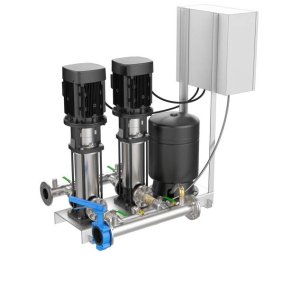
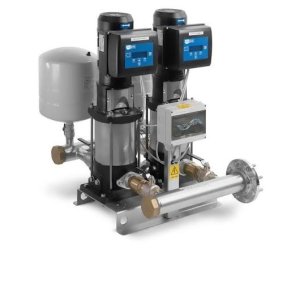
A Booster Pump is a specialized inline centrifugal pump engineered to increase the fluid pressure and volumetric flow rate of an existing liquid pipeline. Unlike primary suction pumps that draw water from deep subterranean sources, a booster pump is installed mid-system; it takes already-pressurized fluid entering its intake port, imparts high kinetic energy via a high-speed rotating impeller, and discharges the fluid at a significantly higher pressure to overcome gravity or frictional resistance in tall high-rise buildings, municipal pipelines, and industrial networks.
1. System Architecture & The Kinetic Boosting Process
Booster pumps do not work in isolation. They function as a bridge between a low-pressure supply line (such as a city water main or a storage tank) and a high-demand distribution network.
The Inline Suction Port: The pump's intake connects directly to the incoming low-pressure line. The fluid enters the center "eye" of a high-speed rotating Impeller.
Centrifugal Acceleration: Driven by an electric motor, the curved blades of the impeller sling the fluid outward at extreme velocities, converting mechanical torque into kinetic energy.
The Volute Casing (Velocity-to-Pressure Conversion): The high-speed fluid exits the outer perimeter of the impeller and enters an expanding, spiral-shaped outer housing called a Volute. As the physical cross-sectional area of the volute channel widens, the fluid naturally slows down, causing its kinetic velocity to transform directly into static fluid pressure, which is then forced out the discharge port:
2. Advanced Multi-Pump Booster Packages
In large commercial or municipal infrastructures, a single booster pump cannot efficiently manage the wide fluctuations in water usage throughout the day. To handle these demands, engineers deploy a Multi-Pump Booster Skid controlled by variable-speed logic.Variable Frequency Drive (VFD) Optimization
Modern booster packages mount multiple small pumps in a parallel manifold configuration, with each pump regulated by its own integrated Variable Frequency Drive (VFD) and electronic Pressure Transducers.
Low Demand (Nighttime): If only a few taps are running, the pressure transducer senses a minimal pressure drop. The smart controller activates just one pump, running its motor at a low frequency (e.g., $30\text{ Hz}$ instead of $60\text{ Hz}$) to save immense electrical energy.
Peak Demand (Morning Rush): If thousands of plumbing fixtures open simultaneously, line pressure plummets. The VFD instantly ramps the first pump up to full speed. If the pressure remains below the target setpoint, the controller sequences the second and third backup pumps into the loop (Cascading Control), seamlessly maintaining constant water pressure across the entire facility.
3. Core Commercial & Industrial Applications
Booster pumps are deployed across a wide range of operating profiles to counteract localized gravity and friction losses.Application MatrixStructural Execution ProfileOperational ObjectiveHigh-Rise Commercial BuildingsMulti-stage vertical booster pumps paired with rooftop break tanks.Overcomes the natural hydrostatic head pressure drop ($1\text{ PSI}$ lost for every $2.31\text{ feet}$ of vertical elevation) to supply water to top-floor penthouses.Reverse Osmosis (RO) FiltrationUltra-high-pressure, corrosion-resistant stainless steel booster lines.Forces water through dense semi-permeable membranes by generating pressures that exceed the natural osmotic pressure of the saltwater solution ($200\text{ to }800\text{ PSI}$).Agricultural Irrigation BlocksHigh-horsepower horizontal split-case booster pumps.Boosts line pressure across vast, miles-long pipe networks to maintain the uniform spray patterns required by center-pivot irrigation nozzles.The Vital Role of Pressure Bladder Tanks
To prevent a booster pump from instantly turning on and off every time a single faucet is cracked open—a destructive cycle known as short-cycling—booster systems integrate a pre-charged Pressure Bladder Tank.
The tank contains a flexible rubber bladder separating pressurized air from the water line. When the pump runs, it crams excess water into the bladder, compressing the air cushion. When a small demand occurs, the expanding air cushion forces water out of the tank into the lines first, acting as a hydraulic energy buffer. This allows the booster pump to remain resting until a substantial, prolonged drop in system pressure is registered.