
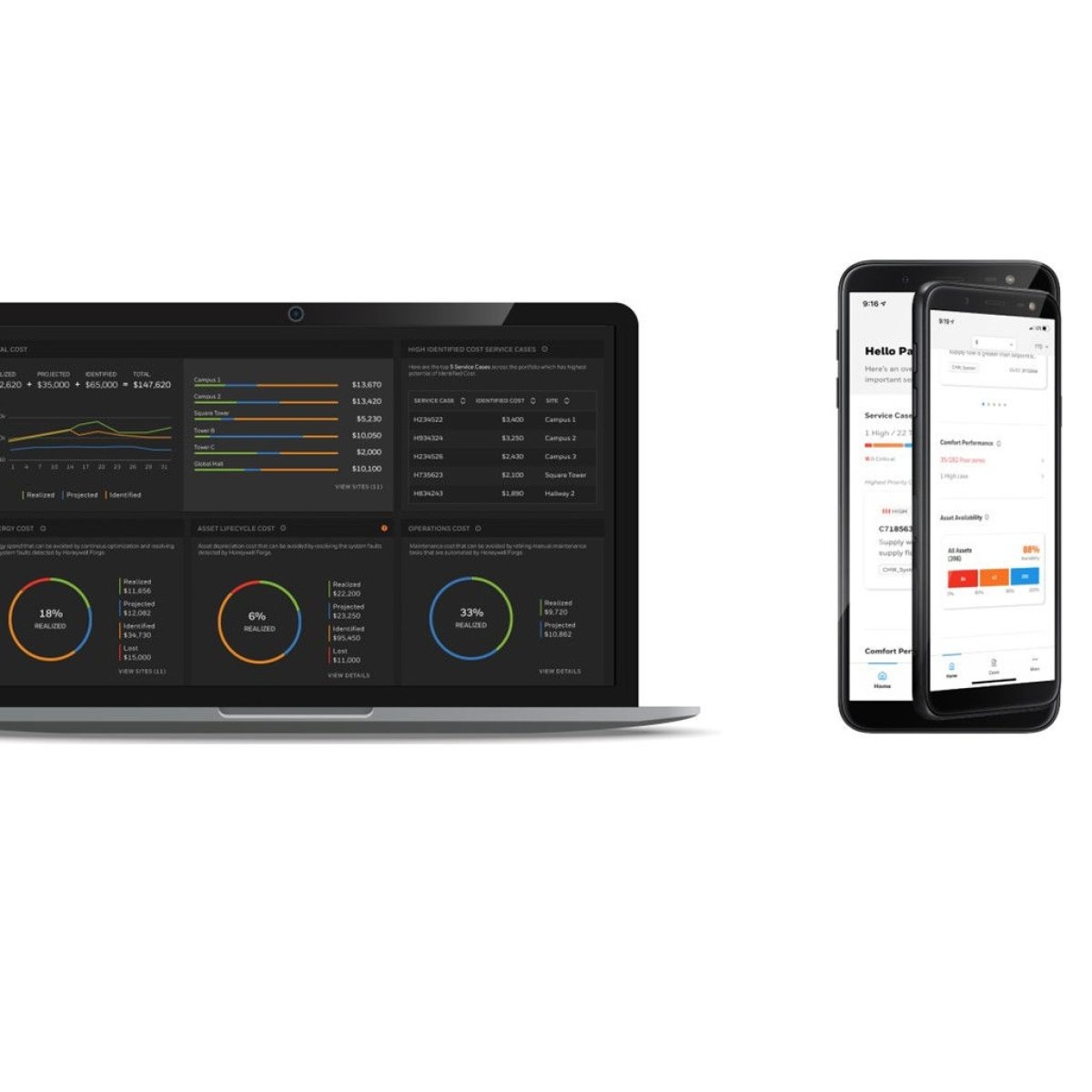
Portfolio-wide efficiency driven by AI and scalable cloud computation.
Cloud Energy Management & Analytics platforms securely aggregate multi-site utility, IoT, and BMS data into a single cloud environment. By applying advanced machine learning, these systems uncover hidden waste, predict peak-demand penalties, automate ESG carbon accounting, and deliver macro-level efficiency recommendations across millions of square feet.
As enterprises grow to manage dozens of scattered facilities, traditional local software tools become siloed. A Cloud Energy Management (EMS) platform securely bridges these isolated properties. By streaming data up from edge gateways and utility smart meters, the cloud normalizes disparate datasets into a unified analytical backend.
Instead of just looking at what happened in a building yesterday, cloud-native engines use massive compute power to run predictive models—factoring in live weather forecasts, changing utility tariffs, and occupancy schedules to optimize energy consumption proactively.
Core Capabilities & Analytics Engine
Virtual Submetering & Disaggregation: Uses advanced AI algorithms to isolate the energy footprint of specific machinery or HVAC subsystems from a single, main electrical feed, bypassing the need for expensive physical hardware submeters.
Weather Normalization: Automatically adjusts historical energy data against localized weather and degree-day data ($CDD/HDD$). This isolates actual mechanical efficiency improvements from simple shifts in ambient seasonal weather.
Peak Demand Forecasting & Load Shifting: Predicts costly "peak demand charges" from utility companies hours in days in advance. The system can send automated alerts or trigger localized automation systems to shed non-essential loads (e.g., dimming common area lights or pre-cooling a facility).
Automated ESG & Carbon Accounting: Converts raw kilowatt-hours ($kWh$) and gas consumption ($Therms$) directly into Scope 1 and Scope 2 carbon emissions ($CO_2e$). It automatically generates audit-ready ESG reports aligned with global reporting standards.
Architecture: The Flow of Energy Data
Cloud analytics systems function by establishing an encrypted pipeline from physical assets up to the web:
The Edge Layer: IoT sensors, smart utility meters, and BMS gateways log second-by-second field telemetry.
The Ingestion Layer: Data is streamed securely via cellular or corporate network protocols (MQTT, HTTPS, BACnet/SC) to a cloud database.
The Analytics Layer: High-compute cloud databases run machine learning algorithms, benchmarking buildings against identical structures in the same climate zone.
The Action Layer: Real-time insights are populated on web portals for energy managers, while automated optimization scripts push setpoint adjustments back down to the building gateways.
Key Advantages of Cloud vs. On-Premises Systems
Infinite Scalability: Add new properties, thousands of IoT sensors, or years of historical data logs instantly without buying physical server mainframes or local storage arrays.
Portfolio-Wide Benchmarking: Rank and compare every building in an organization's portfolio. Identify underperforming sites immediately so capital improvement budgets can be directed to the properties wasting the most energy.
Continuous Global Updates: SaaS platforms roll out feature upgrades, security patches, and utility tariff changes across the entire software application simultaneously, keeping the infrastructure protected and up-to-date.
Hybrid Asset Integration: Aggregates traditional grid consumption with onsite Distributed Energy Resources (DERs), such as solar arrays, battery storage plants, and backup generators, optimizing when to store, use, or sell energy back to the grid.