
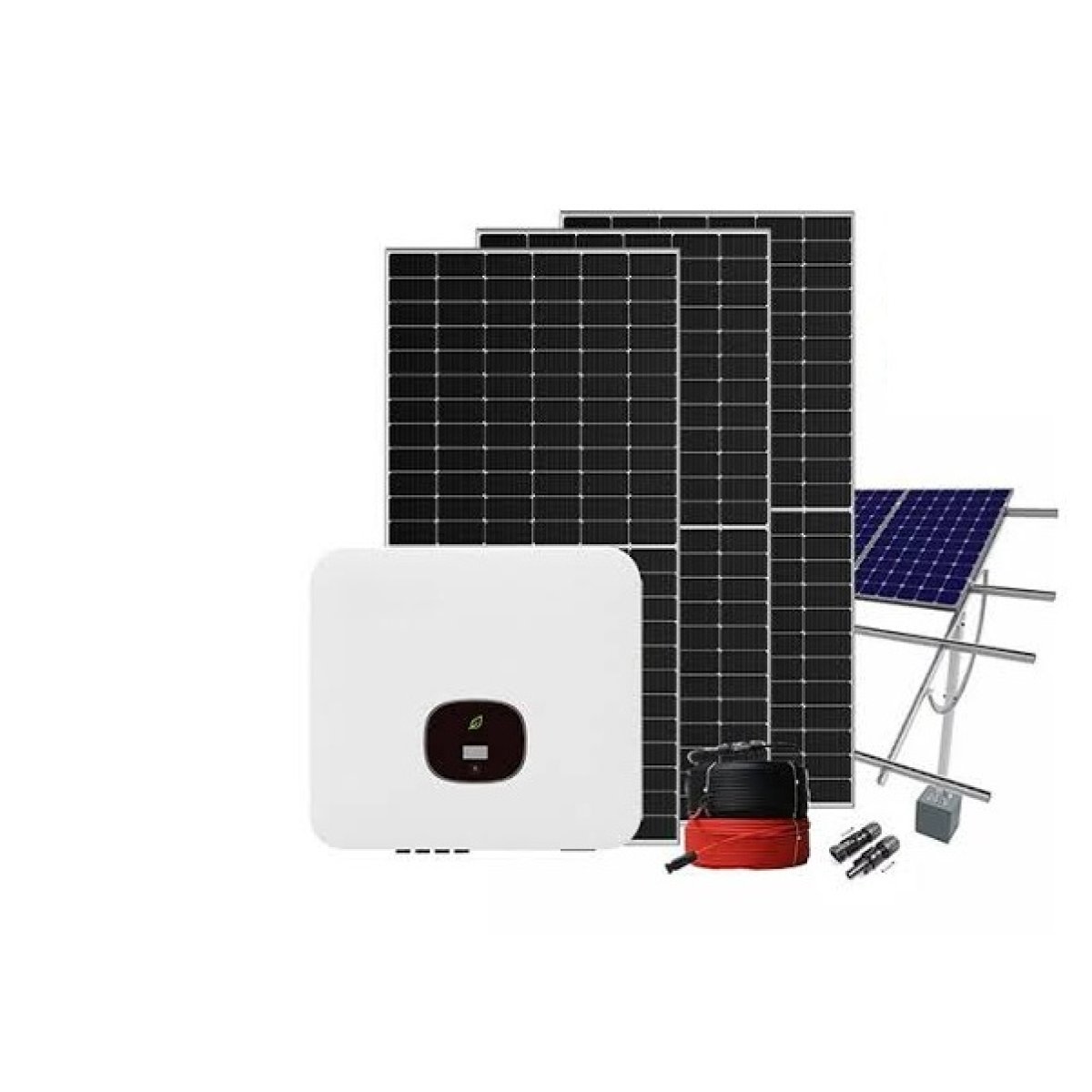
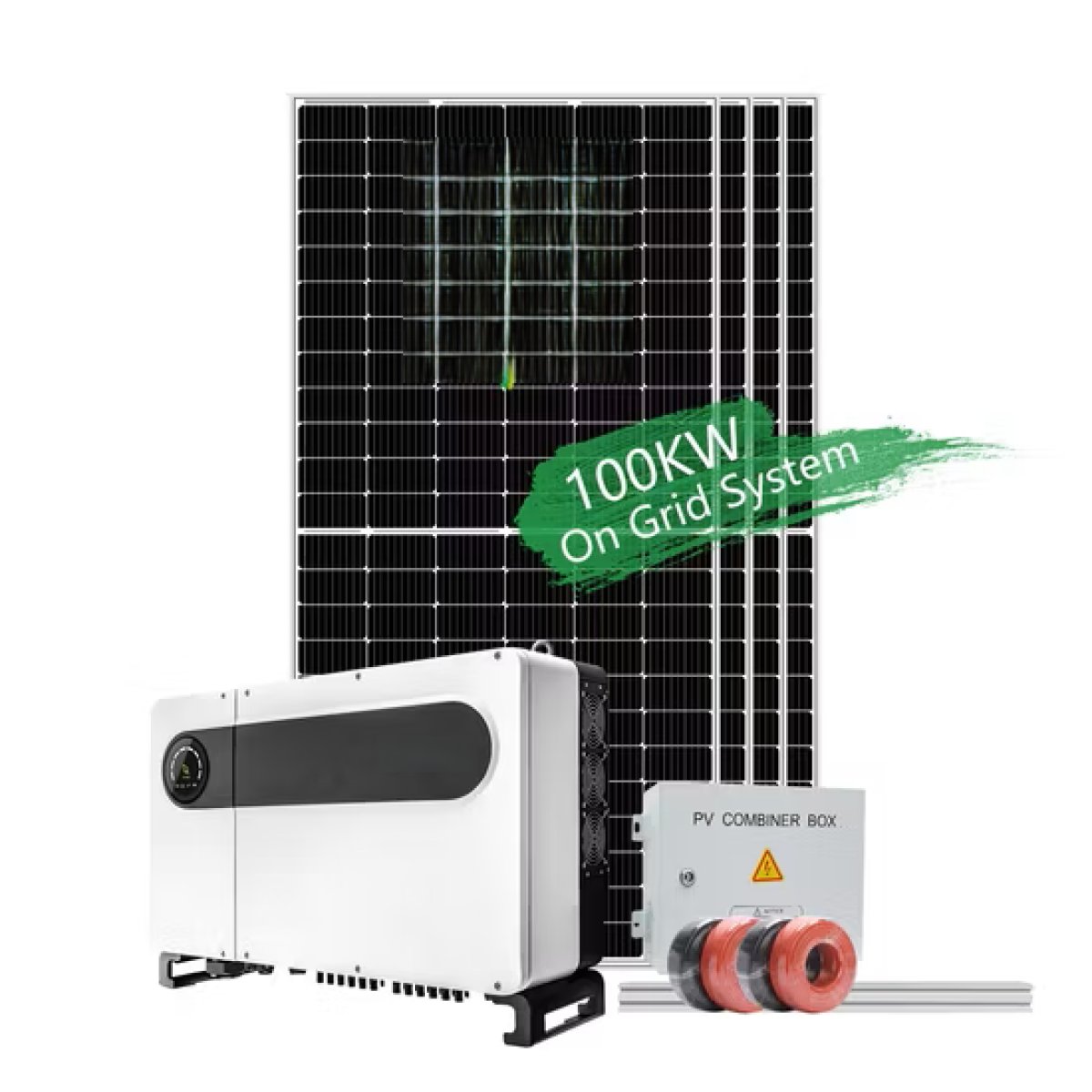
An On-Grid (or Grid-Tied) solar system is a photovoltaic (PV) power network that operates in direct synchronization with the local utility grid. Unlike off-grid setups, an on-grid system does not require expensive battery banks to function; it feeds solar electricity directly into the building's electrical panel for immediate consumption, and automatically exports any surplus power back to the public utility grid, typically earning the owner financial credits via net metering.
1. System Architecture & The Synchronization Pipeline
The architecture of an on-grid solar system is highly streamlined, relying on a continuous, real-time handshake with the utility company's infrastructure.
Photovoltaic (PV) Array: Solar panels installed on a roof or ground mount capture solar irradiance, causing electrons to flow and generating Direct Current (DC) electricity.
Grid-Tied Inverter: The primary intelligence of the system. It converts raw DC power into Alternating Current (AC). Crucially, it samples the grid's utility voltage and frequency, matching its AC output perfectly to the grid's sine wave (e.g., $60\text{Hz}$ at $240\text{V}$ or $120\text{V}$).
Net Meter (Bi-Directional Meter): A specialized billing meter installed by the utility company that replaces standard one-way meters. It possesses two independent registers: one measuring energy pulled from the grid when solar generation is low, and another measuring surplus solar energy flowing into the grid.
2. Financial Mechanics: Net Metering & Feed-in Tariffs
Because on-grid systems lack batteries, they rely on financial structures to offset nighttime electricity costs using daytime solar overproduction:
Net Metering (Net Billing)
During peak daylight hours, a solar array often generates more power than a building consumes. Under a net metering framework, the building's electric meter literally runs backward, feeding surplus power into the grid to power neighboring structures. At the end of the billing cycle, the consumer is only billed for the "net" energy consumed:
If energy exported exceeds energy imported over a month, the credit typically rolls over to the next month or is compensated at a wholesale rate.
Feed-in Tariffs (FiT)
Common in specific regulatory markets, a Feed-in Tariff utilizes a two-meter layout. $100\%$ of the electricity generated by the solar array is exported directly to the grid and paid for at a premium, contracted rate. Concurrently, $100\%$ of the electricity consumed by the building is drawn from the grid and billed at standard consumer rates.
3. The Anti-Islanding Safety Imperative
The single most critical technical rule governing on-grid systems is Anti-Islanding Protection (regulated by international standards like UL 1741 or IEEE 1547).
If a storm or grid accident knocks out municipal utility lines, the grid-tied inverter must detect the loss of utility voltage and completely shut down its own AC power injection within milliseconds.
While this means an on-grid system will not provide backup power during a blackout, it is an absolute safety requirement. If the solar array continued to pump electricity into a downed grid (creating an isolated "island" of energized lines), it could fatally shock utility line workers attempting to repair the wires. For building owners who require power during grid failures, a hybrid system (On-Grid + Battery Storage) must be deployed instead.